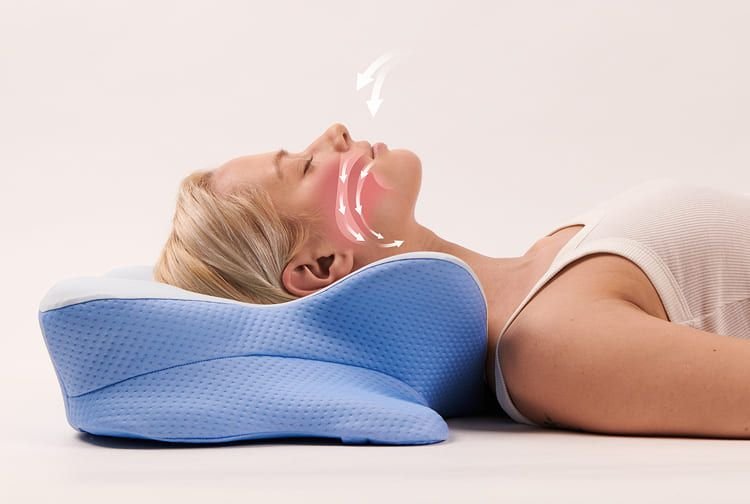
A pillow can reduce snoring caused by your head tipping forward and narrowing your airway, usually on your back. In trials, raising the head of the bed cut breathing events by around a third — real, but partial. A pillow does nothing for snoring driven by congestion, alcohol, weight or sleep apnea.
Snoring is extremely common — common enough that every product category adjacent to a bed eventually claims to fix it. Published prevalence figures vary a great deal depending on how "habitual snoring" is defined and who is asked, so we are not going to quote you a percentage as though it settled anything. Men snore more than women, snoring rises with age and weight, and that is the honest summary.
So let us be specific about what is actually happening, because the mechanism tells you whether a pillow is relevant to you or a waste of money.
Why does snoring happen at all?
Snoring is the sound of soft tissue vibrating as air squeezes past it. When you fall asleep, the muscles of your throat, tongue and soft palate relax. If that relaxation narrows the passage enough, airflow becomes turbulent and the tissue flutters. That flutter is the noise.
Anything that narrows the airway makes snoring more likely. There are five common culprits:
- Head and neck position — chin dropped toward the chest, which kinks the airway
- Nasal congestion — allergies, a cold, or a structural issue forcing mouth breathing
- Alcohol or sedatives — extra muscle relaxation in the throat
- Extra weight around the neck — more soft tissue pressing inward
- Obstructive sleep apnea — the airway repeatedly closes, not just narrows
Read that list again and notice how many of them a pillow could plausibly influence. Exactly one.
What can a pillow actually change?
One thing: the angle of your head and neck, and therefore the shape of the airway behind your tongue.
Two versions of this go wrong.
The pillow that is too tall
On your back on a thick pillow, your chin is pushed down toward your chest. That closes the space at the back of the throat. It is a very common, very fixable cause of snoring, and people rarely suspect it because a tall pillow feels supportive.
The pillow that is too flat
On a collapsed pillow, your head falls backward and your jaw drops open. Mouth breathing follows, the tongue slides back, and you snore for a different reason.
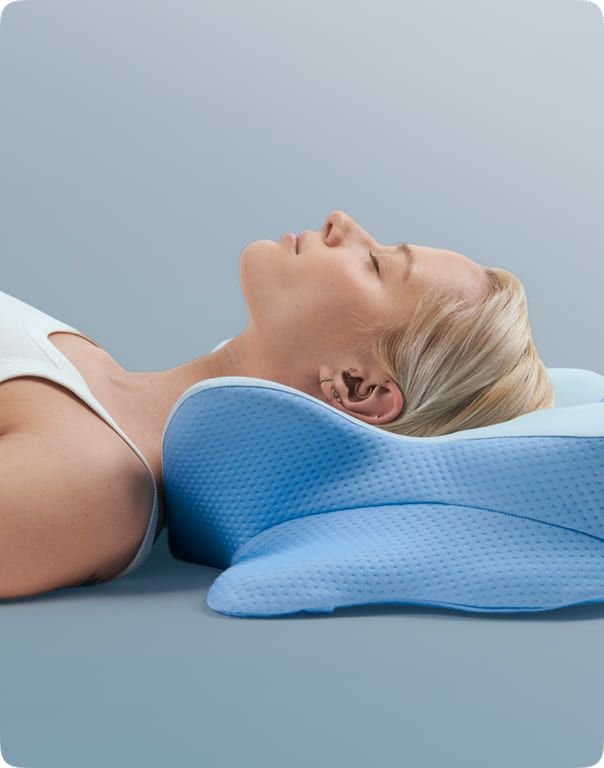
What you want in between is a neutral position: the hollow of your neck supported, your chin neither tucked nor thrown back, your airway as open as it gets.
How do you tell which kind of snorer you are?
Some rough but genuinely useful signals.
| What you notice | Likely mechanism | Would a pillow help? |
|---|---|---|
| You only snore on your back, and stop when you roll onto your side | Position and head angle | Quite possibly, yes |
| You snore worse when your nose is blocked, better when it clears | Nasal congestion | No — treat the congestion |
| You snore heavily after drinking, and much less on dry nights | Alcohol relaxing the throat | No |
| Your partner says you stop breathing, gasp, or choke in your sleep | Possible sleep apnea | No — see a doctor |
| You sleep 8 hours and are still exhausted, with morning headaches | Possible sleep apnea | No — see a doctor |
The first row is the pillow row. If your snoring is position-dependent — loud on your back, quiet on your side — then the shape and height of what is under your head is genuinely part of the picture.
The one thing worth taking seriously
Obstructive sleep apnea is far more common than the older figures suggest. A 2025 analysis published in Respiratory Medicine estimated that 83.7 million US adults — 32.4% of the adult population — were living with obstructive sleep apnea in 2024, and concluded that it remains largely undiagnosed (Respiratory Medicine, 2025). How wide that gap is was measured by the Wisconsin Sleep Cohort, which estimated that 93% of women and 82% of men with moderate to severe sleep apnea had never been clinically diagnosed (Young et al., Sleep, 1997). Women are missed more often, partly because the textbook description of a snorer is a middle-aged man. Untreated apnea is linked with high blood pressure, heart problems and daytime accidents.
If anyone has told you that you stop breathing during sleep, or you wake gasping, or you are exhausted after a full night, please talk to a doctor and ask about a sleep study. No pillow substitutes for that. Better Nights is an editorial site, not a medical one.
Should you screen yourself first? The STOP-BANG questions
Before you spend anything on snoring, spend two minutes on this. STOP-BANG is the short screening questionnaire clinicians use to decide who needs a sleep study. It is eight yes-or-no questions.
- S — Snoring. Do you snore loudly — louder than talking, or loud enough to be heard through a closed door?
- T — Tired. Are you often tired, fatigued or sleepy during the daytime?
- O — Observed. Has anyone observed you stop breathing, choke or gasp during your sleep?
- P — Pressure. Do you have, or are you being treated for, high blood pressure?
- B — BMI. Is your body mass index more than 35?
- A — Age. Are you older than 50?
- N — Neck. Is your neck circumference more than 16 in (40 cm)?
- G — Gender. Are you male?
Count your yes answers. Three or more puts you in the increased-risk group and is a reason to talk to a doctor rather than to a shopping cart. Zero to two is low risk. The questionnaire is published by the American Academy of Sleep Medicine's public education arm, Sleep Education.
This is screening, not diagnosis
STOP-BANG is deliberately over-sensitive. It is built to catch people who might have apnea, not to tell you that you do. A high score means get tested. A low score does not rule apnea out, especially in women, whose symptoms more often show up as fatigue, insomnia and morning headache rather than window-rattling snoring.
How much does position actually change? The numbers
This is the part most snoring articles skip, because the honest numbers are less exciting than the headlines. Here is what the research measures, how big the effect is, and who it applies to. AHI means apnea-hypopnea index — breathing events per hour of sleep.
Raising the head of the bed
How much: mean AHI reduction of about 32%.
In whom: adults with obstructive sleep apnea, across a range of severities.
Souza FJ et al., Sleep and Breathing, 2017.
Positional therapy (staying off your back)
How much: measurable improvement in apnea index and overall severity.
In whom: clearest in people of normal weight. The heavier the patient, the weaker the effect.
Chen WC et al., Scientific Reports, 2015.
An adjustable "smart" pillow
How much: improved apnea measures in mild to moderate cases. No meaningful change in severe cases.
In whom: mild and moderate OSA only.
Elevation pillow versus CPAP
How much: not comparable. Positional and elevation devices shift the index modestly. CPAP works on a different order of magnitude, and it is the treatment with the evidence behind it.
In whom: a pillow is a comfort and mild-snoring measure. It is not an alternative to prescribed treatment for diagnosed apnea.
General direction of the positional-therapy literature cited above. We are not aware of a head-to-head trial giving clean numbers for both.
Read that last box twice if you have been diagnosed with apnea and are hoping a pillow lets you abandon your machine. It does not. What a pillow can reasonably do is reduce simple positional snoring — noise, not a treated medical condition.
What is a realistic result?
For position-related snoring, a better-shaped pillow can mean less noise and fewer wake-ups — for you and for whoever is next to you. Some people notice a clear difference in the first week. Others notice nothing, because their snoring was never about head position.
Nobody should promise you silence. Anyone who does is selling.
What a change of pillow reliably does is take one variable off the table. If you fix your head position and still snore just as loudly, that is useful information: it points you at congestion, alcohol, weight, or a conversation with a doctor.
Five changes that help more than most people expect
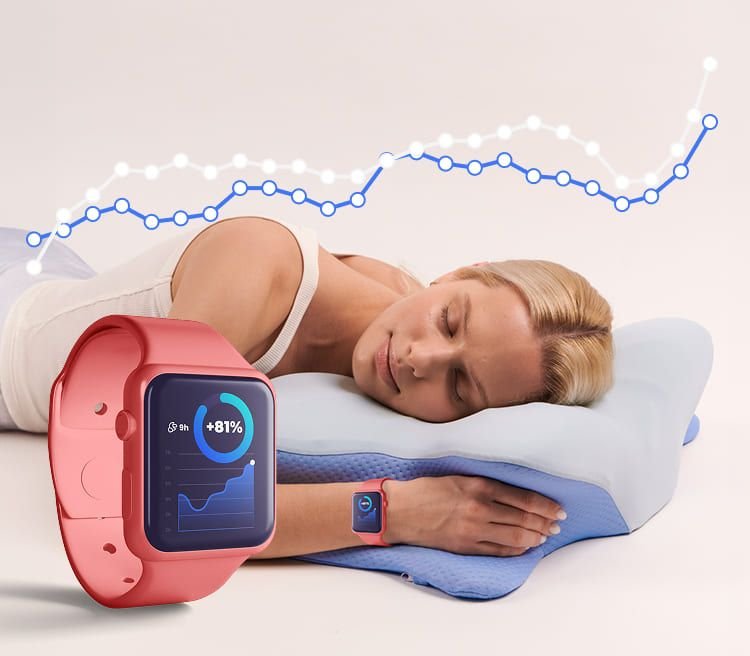
- Sleep on your side. The single most effective free change for position-dependent snoring. Gravity stops pulling your tongue backward.
- Skip alcohol within three hours of bed. The effect on throat muscle tone is larger than most people realise.
- Clear your nose before bed. A saline rinse if you are congested. Mouth breathing is a snoring engine.
- Get the pillow height right. Neutral chin, supported neck. Too tall is as bad as too flat.
- Raise the head of the bed slightly. A few inches under the head end of the frame — not more pillows, which just bends your neck.
Try these before you try anything you have to plug in.
What about a wedge pillow?
If you judge pillow shapes purely on published evidence, the wedge wins. Raising the whole upper body is the intervention behind that 32% average reduction in breathing events, and it is the one sleep researchers have measured most often. A contoured pillow changes the angle of your head. A wedge changes the angle of your torso, which is a bigger lever.
So why does almost nobody stick with one?
- You slide down it. Most people wake at the bottom of the wedge with their neck folded, which undoes the whole point.
- It is a back-sleeping device. If you turn onto your side, a wedge is awkward at best.
- It takes over the bed. Partners tend to have opinions about this.
When a wedge is genuinely the better choice: if you have acid reflux alongside your snoring — the two travel together more often than people expect, and elevation helps both — or if a sleep study has confirmed that your apnea is positional. In those two cases the wedge is doing something a head-and-neck pillow cannot.
When a contoured pillow is the better choice: if your snoring is about chin position rather than reflux, if you move between your side and your back, or if you want something you will still be using in three months. The best snoring intervention is the one you do not abandon in week two.

Derila Ergo contoured pillow
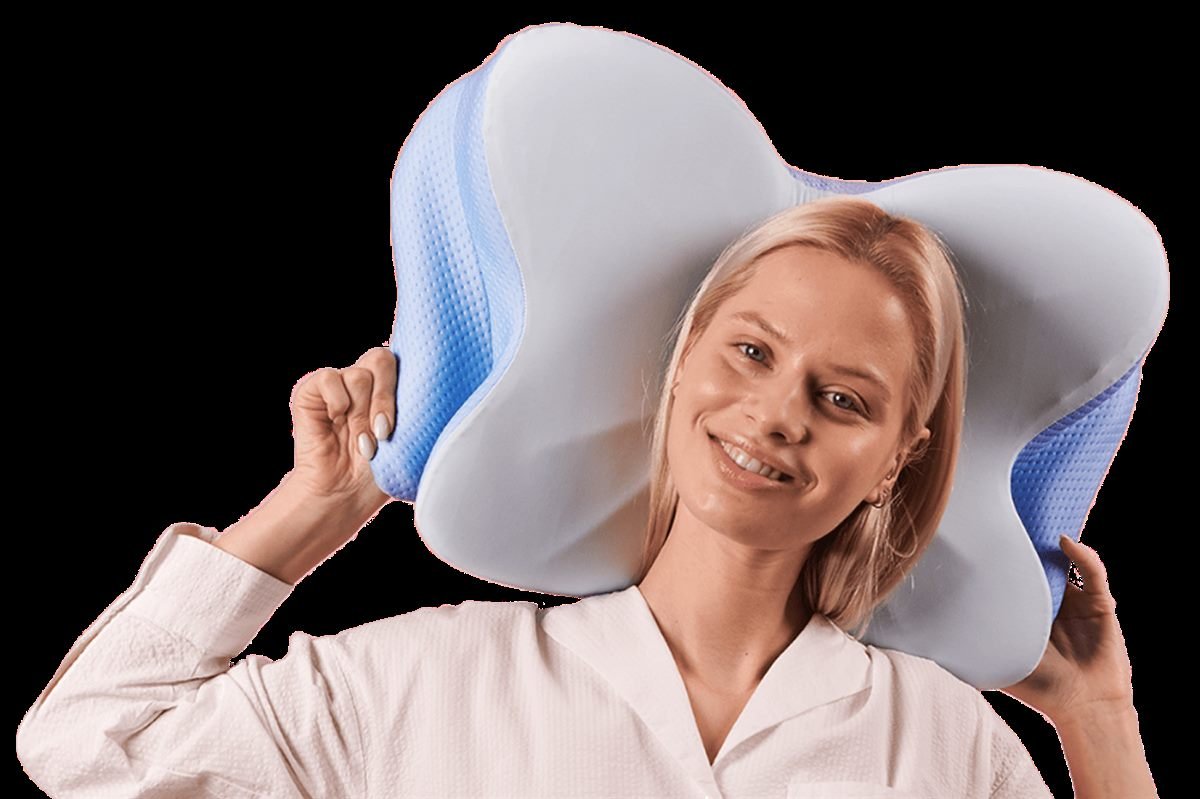
A molded pillow with a low center and a raised neck lip, which is the shape that keeps a back sleeper's chin neutral. Currently bundled with three free bonuses, two of which are breathing and airway exercise programmes for snoring.
- 60-night money-back guarantee
- 3 free bonuses included
- Up to 70% off currently
- Ventilated foam
What the 60-night guarantee actually involves
Worth knowing before you order, because the details are rarely on the sales page. According to the manufacturer's own support pages, the 60 nights are counted from the day your parcel is delivered, not from the day you order — so shipping time does not eat into your trial. To return it you email support@derila.com and ask for an RMA number; parcels sent back without one are not processed. You pay the return shipping. Once the warehouse receives the pillow, the refund is issued within 14 days, and the money typically lands 3 to 5 business days after that.
None of that is unusual, and 60 nights counted from delivery is more generous than it first sounds. But "money-back guarantee" and "free returns" are not the same sentence, and you should know which one you are agreeing to.
How to test it properly: three nights before, three nights after
Snorers are famously bad witnesses to their own snoring, and partners are famously unreliable narrators after a bad night. Measure instead of arguing.
- Record three nights on your current setup. Any free phone app that records sleep audio will do. Phone on the nightstand, face down, plugged in.
- Write down the conditions. Alcohol, blocked nose, how late you went to bed. These move snoring more than most products do, and they will wreck your comparison if you ignore them.
- Change one thing. The pillow, or the head of the bed, or your position. One. If you change three at once you will never know which one worked.
- Give it a week to settle, then record three more nights. A new pillow height feels strange for the first few nights, and strange makes people sleep badly for reasons that have nothing to do with their airway.
- Compare the recordings, not your memory. Most apps report minutes of snoring and peak volume. That is your before-and-after.
Six nights of audio will tell you more than six months of guessing, and if the numbers do not move, you have learned something useful: your snoring is not positional, and you can stop shopping and start looking at congestion, alcohol, weight or a sleep study.
Why the anti-snoring pillow you already bought did not work
If you are reading this with a contoured pillow already under your bed, there are three likely explanations, and none of them is that you did it wrong.
Your snoring was never positional
The most common reason by far. If you snore just as loudly on your side as on your back, head angle was never the mechanism. Congestion, alcohol, weight around the neck and apnea are all indifferent to what your head is resting on.
You leave the position within 20 minutes
A pillow only works while your head is on it in the way the designer intended. Plenty of people settle beautifully, drift off, and are flat on their back with their chin on their chest by 1am. If you wake up in a completely different position from the one you fell asleep in, the shape of the pillow is barely in the picture. That is the problem positional-therapy devices exist to solve.
Your apnea is more than mild
In the research above, the pillow-shaped interventions moved mild and moderate cases and did essentially nothing for severe ones. If your airway is closing rather than narrowing, no amount of foam re-opens it.
If you are the one lying next to the snorer
A large share of the people searching this question are not snorers at all. They are the person who has not had a full night's sleep in three years and is quietly researching at 2am.
Two things are worth knowing. First, you are the one who can gather the evidence: record a night, and if you hear pauses, gasping or choking, that recording is the most useful thing you can take to a doctor's appointment. Second, keep the conversation about breathing rather than about noise. "You snore and I am exhausted" starts an argument. "I recorded this and you stopped breathing for eleven seconds" starts a sleep study.
In the meantime, earplugs are not a failure of the relationship. They are a bridge until the real cause is dealt with.
Who should not buy an anti-snoring pillow
We would rather lose the sale than have you spend money on the wrong thing. Skip it if:
- You snore the same on your side as on your back. Your snoring is not positional, and position is the only thing a pillow controls.
- You have been diagnosed with moderate or severe apnea. Use the treatment you were prescribed. A pillow is not a step down from CPAP.
- Someone has seen you stop breathing and you have not been tested. Get tested first. The pillow will still be there afterwards.
- Your snoring tracks your nose. Loud when you are congested, quiet when you are clear — treat the congestion.
- You want silence. Nobody can sell you that, and anyone promising it is selling.
It is worth trying if you snore mainly on your back, go quiet when you roll over, use a tall or collapsed pillow, and have nothing on the STOP-BANG list that points at apnea.
Whatever you change, give it two weeks and get feedback from someone who can actually hear you.
Frequently asked questions
Can a pillow stop snoring completely?
Rarely completely, and only when the snoring is caused by head position. If you snore on your back and go quiet on your side, a pillow that keeps your chin neutral can reduce it noticeably. If your snoring is driven by congestion, alcohol, weight or sleep apnea, a pillow will not resolve it.
What kind of pillow is best for snoring?
One that keeps your neck supported and your chin neutral — neither tucked toward your chest nor tipped back. In practice that means a contoured pillow with a lower center and a raised neck edge, at a height matched to your sleeping position. Very tall pillows often make snoring worse.
Does sleeping on your side stop snoring?
It helps a great deal for many people. On your back, gravity lets the tongue and soft palate fall toward the back of the throat. Side sleeping removes that. It is the first thing to try because it costs nothing.
Is snoring always sleep apnea?
No. Plenty of people snore without having apnea. The difference that matters is whether your breathing actually stops. Pauses in breathing, gasping or choking awake, and being exhausted after a full night's sleep are signs that need a doctor and possibly a sleep study — not a new pillow.
How long before I know if a new pillow helped my snoring?
Two weeks, with someone else listening or a recording app running. Judge it on several nights rather than one, because alcohol, congestion and how tired you are all move the result around night to night.
Does raising the head of the bed help snoring?
It is the pillow-adjacent change with the strongest evidence behind it. In published work, elevating the head of the bed reduced breathing events by an average of around 32%. Raise the frame or use a wedge rather than stacking pillows — stacked pillows bend your neck forward and can make the airway narrower, not wider.
Do wedge pillows work better than contoured pillows for snoring?
On the evidence, elevation of the whole upper body has been measured more often and shows larger effects than head-and-neck shaping. In practice most people slide down a wedge and abandon it, and it only works for back sleeping. A wedge is the better pick if you also have acid reflux or confirmed positional apnea; a contoured pillow is the better pick if the issue is chin position and you move between your side and your back.
Do anti-snoring pillows work for back sleepers?
Back sleeping is where they have the most to work with, because that is the position where a poor head angle does the most narrowing. A pillow that supports the hollow of the neck while keeping the head slightly lower is the shape to look for.
How we researched this article
This is a review of the published literature plus a practical measurement guide. It is not laboratory testing, and it is not medical advice. Return and refund terms come from the manufacturer's own published support pages, checked in August 2026.
Sources cited in the text:
- Prevalence of obstructive sleep apnea in US adults, 2024 — Sönmez I et al., Respiratory Medicine, 2025
- Undiagnosed proportion in men and women — Young T et al., Sleep, 1997 (Wisconsin Sleep Cohort)
- Adjustable pillow in mild to moderate versus severe OSA — SLEEP, 2025
- Chen WC et al., positional therapy and body weight — Scientific Reports, 2015
- Souza FJ et al., head-of-bed elevation and AHI — Sleep and Breathing, 2017
- STOP-BANG questionnaire — Sleep Education, American Academy of Sleep Medicine