In the pooled studies, latex pillows came out ahead for neck pain — and we'll show you that research even though we cover a memory foam pillow. But material matters less than height. Side sleepers need a tall pillow that won't collapse: latex or contoured memory foam. Back sleepers need medium. Stomach sleepers need low and soft, and down is honestly fine there.
"Memory foam or down?" is usually the first question people ask when they go pillow shopping. It's also the wrong first question, and asking it first is how you end up with a beautiful pillow that wrecks your neck.
So this guide does two things. It gives you the honest rundown on each material — including the study results that don't flatter the pillow we cover on this site. And it keeps dragging you back to the question that actually decides your mornings: which material holds the right height for the way you sleep.
Does pillow material actually matter?
Less than the marketing says. Here's the hierarchy, and it's worth getting straight before you compare a single fill.
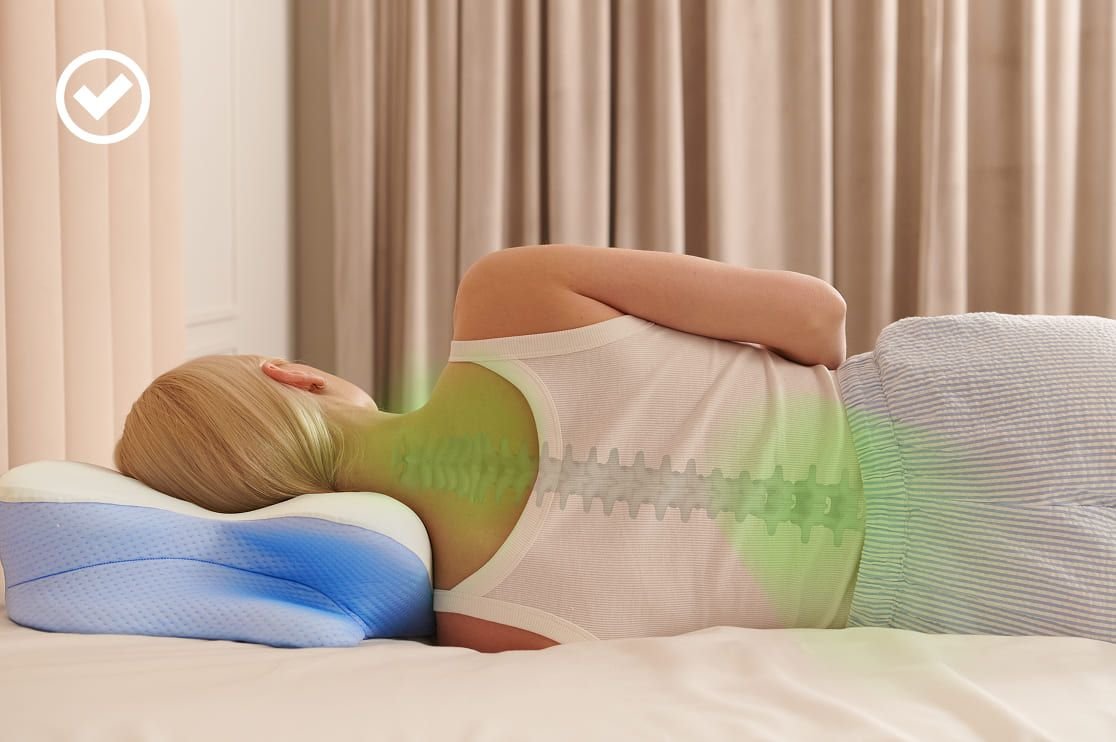
What decides whether you wake up sore is loft — the height of the pillow under the weight of your head. The right loft keeps your nose in line with the center of your chest and your neck in the natural curve of your spine. The wrong loft bends your neck for seven hours, and no material rescues that.
Loft isn't a matter of taste, either. A 2024 study derived optimal pillow height from shoulder width and then tested the results for alignment and comfort (study, PubMed). Heights of 3.8 to 4.6 inches (9.7–11.8 cm) produced the straightest necks, and 4.6 to 5.4 inches (11.8–13.8 cm) got the highest comfort ratings. Your number comes from your shoulders, not from a preference quiz. We walk through the two-minute measurement in the full neck pain guide.
Where material earns its place is the second question: once you know your loft, which fill still delivers it at 4am, under a head that weighs as much as a bowling ball? That's the lens for everything below. Not "which feels nicest in the store" — which one is still the right height six hours into the night.
Which material won in the actual studies?
Latex. We're not going to bury that.
A 2021 systematic review and meta-analysis in Clinical Biomechanics pooled nine studies with 555 participants and looked at how pillow design affects neck pain, waking symptoms, neck disability, sleep quality and spinal alignment. Across the pooled results, latex pillows came out ahead of the alternatives on pain and disability (Chun-Yiu et al., Clinical Biomechanics, 2021).
This site covers a memory foam pillow in depth, so let's be clear about what we're doing: telling you the material that won the studies is not the material we write about most. If a "memory foam vs latex" article never mentions that meta-analysis, it wasn't written to inform you.
Now the context, because it changes the conclusion less than you'd think — and it's the same point we make in the neck pain guide. The differences between materials in those studies were small next to the difference between a pillow at the right height and a pillow at the wrong one. Material decides how the surface feels, how hot it runs and how long it lasts. Shape and height decide where your head sits, which is what your neck cares about.
And that's where contoured memory foam earns its argument: because it's molded rather than stuffed, it holds its height under load all night. Latex holds height too — it's the other "doesn't collapse" material, which is no accident given the study results. Down is the one that quietly gives up, and we'll get to it.
How does memory foam actually behave under your head?
Memory foam is polyurethane engineered to soften where your body warms it, so it slowly takes the shape of whatever presses in. Under a head, that means it cradles instead of pushing back.
What it does well. A molded, contoured foam pillow keeps its published height under load, night after night, because the shape is baked in — there's no filling to migrate or crush flat. That's the whole case for it: if you measured your loft, a contoured foam pillow is the material most likely to still be that loft at 4am, with a dipped center for your head and a raised edge for your neck.
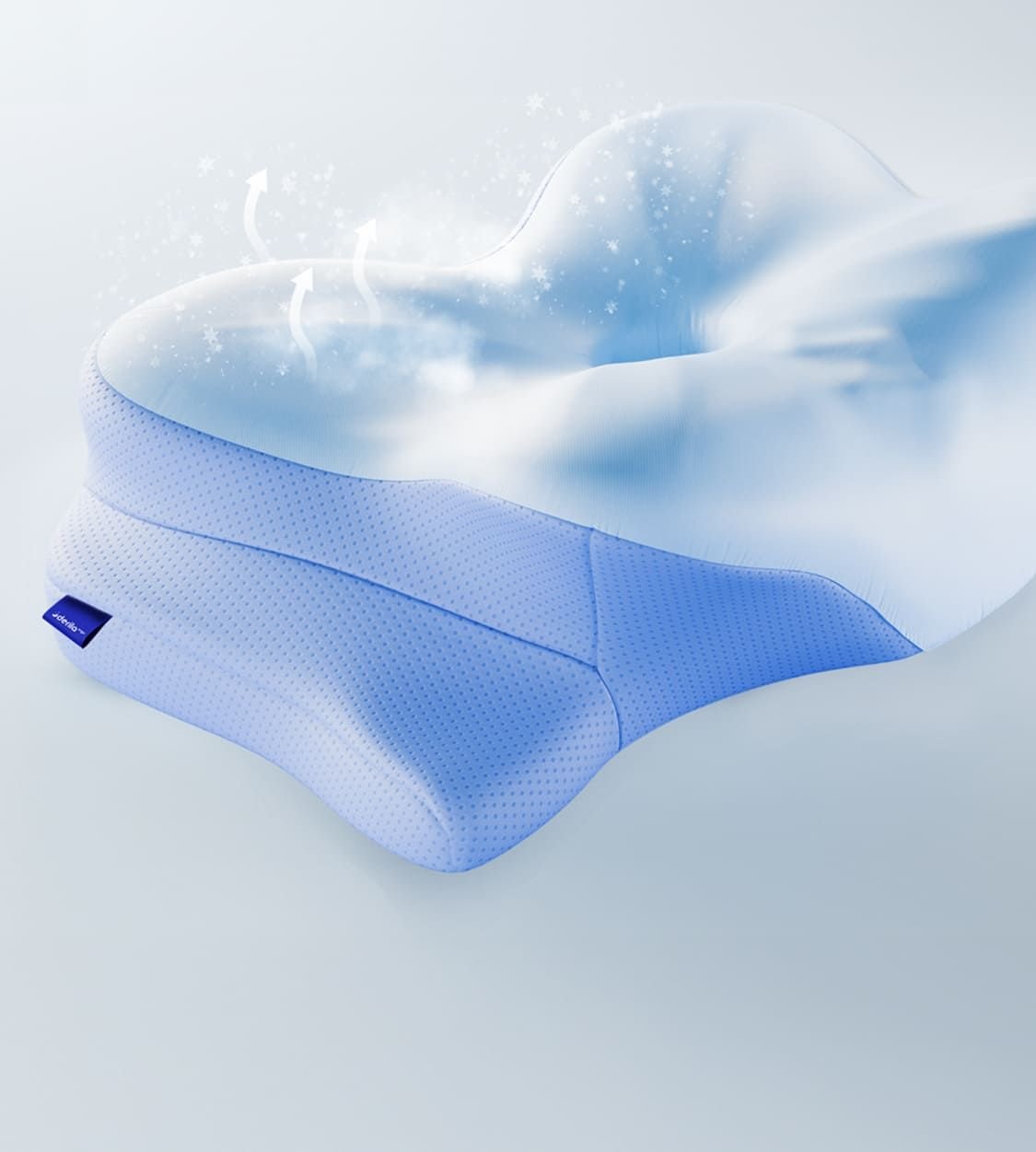
The temperature quirk. Memory foam is heat-sensitive by design. In a cold bedroom it starts firm and softens as it warms under you; in a warm room it's softer from the first minute. It's not defective, but it surprises people in winter. Solid foam also traps heat unless it's ventilated — look for perforated foam and a breathable cover if you sleep hot.
The first-night smell. New foam off-gasses — compounds trapped during manufacturing release when the packaging comes off, and it smells chemical. The fix is boring: unwrap it and let it stand somewhere ventilated for 24 to 72 hours before it goes on your bed. If you want to know what's in the foam, look for a CertiPUR-US mark, a certification that tests for formaldehyde, phthalates, heavy metals and low VOC emissions. It says nothing about comfort. It's about what you're breathing.
What's the real story with down and feather?
Down is the soft inner plumage of ducks and geese, and nothing else in the pillow world feels like it. It's the hotel-luxury fill, and if the only job of a pillow were the first thirty seconds, down would win every comparison.
The problem is hour four. Down has almost no structural resistance — that's exactly what makes it feel like a cloud — so under the steady weight of a head it compresses and keeps compressing. A down pillow that measures 6 inches (15 cm) fluffed can be down to 2 inches (5 cm) by the middle of the night. That's why down owners re-fluff every single evening: they're rebuilding a loft the pillow can't hold on its own. If you sleep on your side, that nightly collapse is your neck bending toward the mattress in slow motion.
Three more things the down aisle won't volunteer:
- Allergies. Some people react to down itself, and feather pillows are happy homes for dust mites over time. If you wake congested, your pillow is a legitimate suspect.
- Real down is expensive. Genuine high-fill goose down costs serious money, and cheaper "down" pillows are usually mostly feathers — which are heavier, pokier and flatter.
- Quills. Feather blends work their way through the cover. Anyone who has been jabbed awake knows.
Where down is genuinely the right answer: stomach sleepers, and anyone who needs a very low, very soft pillow. More on that below — we're not here to pretend one material loses everywhere.
Is latex the best pillow material, then?
On the study results, it has the best claim. Here's what living with it is actually like.
The feel is springy, not sinking. Latex pushes back instantly. Where memory foam slowly cradles, latex floats your head on top. Some people love that responsiveness; people who want to nestle into a pillow often don't. It also doesn't contour to the curve of your neck the way molded foam does — it supports by resisting, not by matching your shape.
It holds height and keeps holding it. Like contoured foam, latex passes the 4am test, and it's famously durable — a quality latex pillow keeps its resilience for years after polyester and down have gone flat.
The trade-offs are practical. It's usually the most expensive fill on the shelf. It's heavy — noticeably so, if you're someone who repositions the pillow all night. And while latex is naturally breathable and most people find it cooler than solid memory foam, a dense latex core can still run warm for genuinely hot sleepers. If you have a latex allergy, this one's off the table entirely.
Honest summary: if you tried memory foam and found it too slow, too warm or too enveloping, latex is the material we'd point you to next. It solves the same height problem by a different route.
What about shredded foam and hybrid pillows?
Shredded memory foam — sometimes blended with latex pieces or fiber — is chopped fill in a zippered case, and its selling point is real: you can open it and add or remove fill until the loft matches your measurement. For people between sizes, that's genuinely useful.
The catch is consistency. Chopped fill shifts. The support under your head at 11pm isn't necessarily the support at 4am, and shredded pillows need reshaping the way down needs fluffing — less often, but the habit doesn't go away. You traded the molded pillow's fixed geometry for adjustability, and you gave up the "set it and forget it" part.
| Material | Holds loft at 4am? | Runs hot? | Lasts | Best for |
|---|---|---|---|---|
| Contoured memory foam | Yes — molded shape is fixed | Solid foam yes; ventilated foam much less | 2–3 years | Side and back sleepers who want the same support every night |
| Latex | Yes — springy and resilient | Mostly no; dense cores can run warm for hot sleepers | 3–4 years, often more | Side and back sleepers who dislike the slow memory foam feel |
| Down / feather | No — collapses under the head | Yes, traps heat | Varies; loft fades long before the pillow "dies" | Stomach sleepers and anyone needing very low, very soft |
| Shredded foam / hybrid | Mostly — fill shifts and needs reshaping | Moderate | 2–3 years | People between loft sizes who want to tune the fill themselves |
| Polyester (standard) | Briefly, then flat for good | Yes | 6 months–2 years | Guest rooms. It's the usual culprit behind morning stiffness |
One pattern runs through the whole table: anything you can squash flat with one hand will be squashed flat by your head.
Which material fits your sleep position?
This is where the comparison stops being abstract. Your position sets the loft you need; the loft rules materials in or out.
Side sleepers: the tallest order
You need the most height of anyone — the whole gap between your ear and the point of your shoulder, typically 4 to 6 inches (10–15 cm) under load. That immediately disqualifies anything that collapses. Latex or contoured memory foam are the two materials that reliably hold that much loft; down and standard polyester are the two most common reasons side sleepers wake up sore. If this is you, the measurement matters more than for anyone else — here's how to find your number with a tape measure.
Back sleepers: medium, with neck support
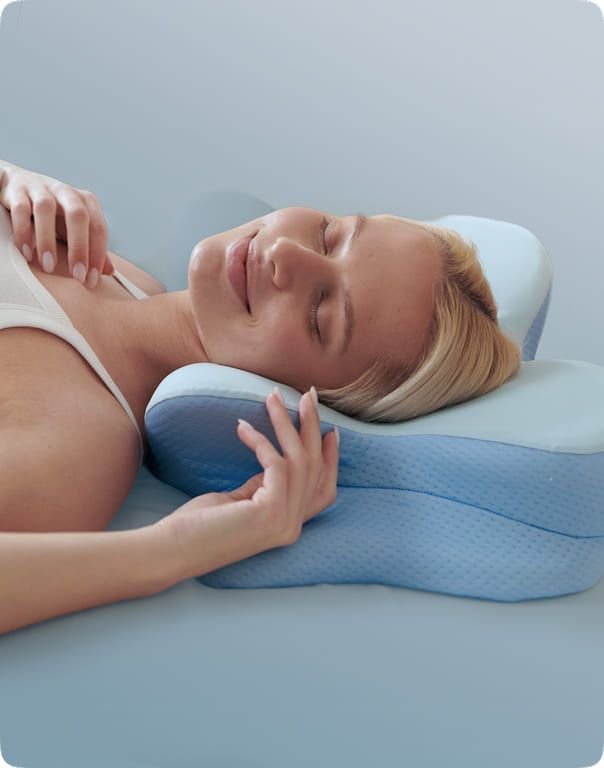
You need medium-low loft — enough to fill the hollow of your neck without pushing your chin toward your chest. Contoured memory foam was practically designed for this position: low center for the skull, raised lip under the neck. A medium latex pillow works too. Down is risky here, not because it's too tall but because your head sinks through it and ends up tilted back by morning.
Stomach sleepers: the one place down wins
You need almost no pillow at all — anything tall cranks your head up and back on top of the rotation your neck is already holding. A soft, thin, squashable down pillow is genuinely the right call here, and we'll say so even though it's not the material we cover. The bigger issue is the position itself: sleeping face-down turns your head 90 degrees for hours, and no fill fixes rotation. If you're a stomach sleeper with neck pain, changing position will do more than changing materials.
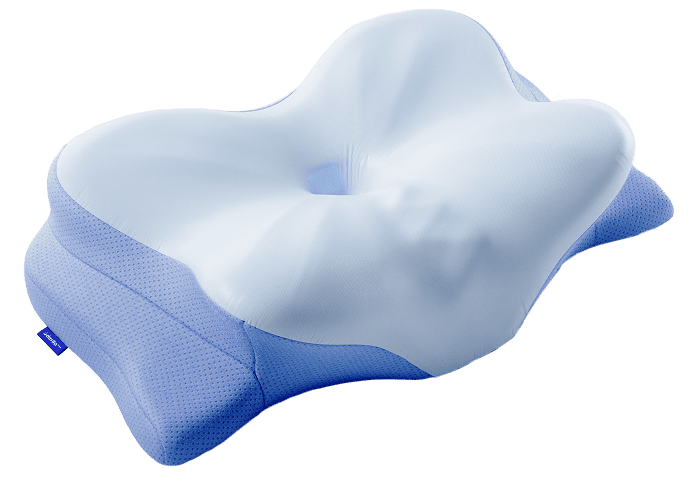
Derila Ergo contoured pillow
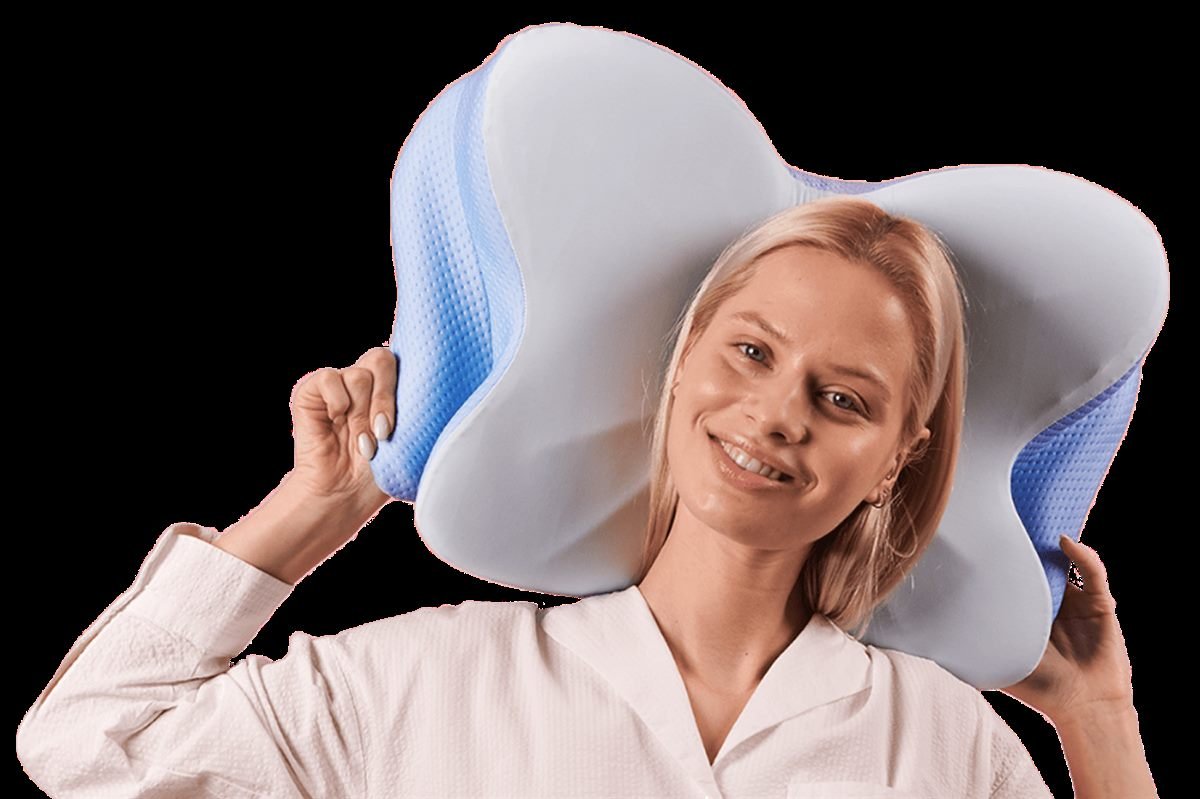
A molded memory foam pillow built around the argument above: it holds its height under load, with a dipped center for back sleeping and raised wings for side sleeping. Our full review covers who it suits — and who should skip it.
- 60-night money-back guarantee
- Up to 70% off currently
- 3 free bonuses included
- OEKO-TEX certified cover
How do you know your current pillow is done?
Before you spend anything on a new material, check whether your problem is simply that the old pillow died. Two quick checks:
- The fold test. Fold the pillow in half and let go. A pillow with life left springs back open. A pillow that stays folded, or creeps open slowly, has lost its resilience — it's not supporting your head anymore, whatever it's filled with.
- The calendar. The common recommendation, including in the Sleep Foundation's guide to replacing pillows, is every one to two years for most types. Latex and molded foam sit at the longer end; polyester at the shorter end; down keeps existing for years but stops holding loft much earlier.
The behavioral signs count too: you double the pillow over to get height, you punch it into shape before you can sleep, or you wake up with your head basically on the mattress. All three mean the material conversation is overdue.
Who should not buy a memory foam pillow?
Most material comparisons end with "it depends on preference." Here's the section they skip. A contoured memory foam pillow is a poor purchase if:
- You want to sink into softness. Molded foam is firm on purpose. If the down feeling is what you love and you sleep on your stomach or need low loft anyway, buy down and don't look back.
- You sleep only on your stomach. A contoured pillow's whole feature set — height retention, raised edges — works against this position. You need low and soft.
- You sleep very hot and won't check for ventilation. Solid, unventilated memory foam traps heat. If you buy foam, buy perforated foam with a breathable cover, or buy latex instead.
- You can't wait out the first weeks. New foam needs 24 to 72 hours of airing before use, and a contoured shape takes about two weeks of adjustment before it feels normal. Judged on night two, a correct pillow fails.
- You're chemically sensitive and the foam carries no certification. Uncertified foam tells you nothing about what's in it. Look for CertiPUR-US or an equivalent, or choose natural latex.
- Your neck pain has a diagnosed cause. Disc problems, arthritis, nerve symptoms — follow that treatment first. A pillow is bedding, not therapy, whatever it's made of.
If you do test one, know the return terms first
Any new pillow material takes about two weeks to judge fairly, so the return window is the spec that matters most. On the Derila support pages, the 60-night guarantee is counted from the day the parcel is delivered, not the day you order. To return it, you email support@derila.com and request an RMA number first — parcels sent back without one aren't processed. Return shipping is at your cost. Once the warehouse receives the pillow, the refund is issued within 14 days and usually lands 3 to 5 business days after that. Terms can change, so read them on the order page before you buy.
The bottom line
Measure first. The loft your shoulders need is the decision that determines your mornings, and it's the same number whatever fill you choose.
Then let your position pick the shortlist. Side or back sleeper: latex or contoured memory foam, the two materials that hold height under load — foam if you want contouring and a fixed shape, latex if you want spring and coolness and don't mind paying for it. Stomach sleeper: low and soft, and down is the honest answer. And whatever you buy, buy it somewhere with a return window long enough to cover the two-week adjustment, because no material comparison survives contact with your actual neck.
Frequently asked questions
Which pillow material is best for neck pain?
In the pooled research, latex. A 2021 meta-analysis in Clinical Biomechanics covering nine studies and 555 participants found latex pillows came out ahead on neck pain and disability. But the differences between materials were small next to the effect of pillow height — a latex pillow at the wrong loft loses to any material at the right one. Measure your loft first, then choose between latex and contoured memory foam, the two fills that hold height under load.
Is memory foam or latex better for side sleepers?
Both hold the 4 to 6 inches (10–15 cm) of loft a side sleeper typically needs, so both work — the choice is feel. Contoured memory foam cradles the head slowly and keeps a fixed molded shape with a raised wing for the shoulder gap. Latex pushes back instantly, sleeps cooler for most people, and lasts longer, but costs more and doesn't contour. The materials to avoid on your side are down and standard polyester, which collapse during the night.
Are down pillows bad for your neck?
For side and back sleepers with neck pain, usually yes — down compresses under the weight of a head and keeps compressing, so the loft you fluffed at bedtime is gone by the middle of the night. For stomach sleepers it's the opposite: down's softness and low profile make it one of the best choices for that position. Down can also aggravate allergies, and feather blends collect dust mites over time.
How long does memory foam off-gassing last?
The smell is strongest in the first hours after unboxing and fades fast with air. Unwrap the pillow and let it stand in a ventilated room for 24 to 72 hours before sleeping on it, and in almost every case the odor is gone. A CertiPUR-US mark means the foam has been tested for formaldehyde, phthalates, heavy metals and low VOC emissions.
What is CertiPUR-US certification?
It's a certification program for polyurethane foam that tests for formaldehyde, phthalates, heavy metals, ozone depleters and low VOC emissions. It tells you about the chemistry of the foam, not about comfort or support — a certified pillow can still be the wrong height for you. It's worth looking for because uncertified foam tells you nothing about what you're breathing.
How often should you replace each type of pillow?
Every one to two years for most types is the common recommendation, including in the Sleep Foundation's guide to replacing pillows. In practice, latex and molded memory foam last toward the long end — two to three years or more — while polyester often dies within a year, and down keeps existing for years but stops holding useful loft much earlier. The fold test settles it: fold the pillow in half, and if it doesn't spring back open, it's done.
Does latex sleep cooler than memory foam?
Usually. Latex is naturally breathable and doesn't soften with body heat, so most hot sleepers find it cooler than solid memory foam, which traps warmth against the head. Ventilated or perforated memory foam closes most of that gap. A dense latex core can still run warm for genuinely hot sleepers, so breathability of the cover matters with either material.
How we researched this article
This comparison is a review of the published literature plus manufacturer specifications and publicly available customer feedback. It is not laboratory testing and it is not medical advice. Return and refund terms come from the manufacturer's own support pages, checked in August 2026.
Sources cited in the text:
- Pillow designs, neck pain and spinal alignment — Chun-Yiu et al., systematic review and meta-analysis, Clinical Biomechanics, 2021
- Optimal pillow height derived from shoulder width, 2024 — PubMed
- Pillow replacement intervals — Sleep Foundation
When the material isn't the problem
If you have numbness, tingling or weakness running into an arm or hand, neck pain after any impact, pain with fever or unexplained weight loss, or severe pain no position relieves, stop shopping and see a healthcare professional. Better Nights is an editorial site, not a medical one. Nothing here is a diagnosis or treatment plan.
Read next
- Cervical pillow for neck pain: the complete guide — the height formula, in detail
- Pillow height for side sleepers — measure, then buy
- Why you wake up with a stiff neck every morning — seven causes, ranked
- Our full Derila Ergo review — rating, who it suits, who should skip it