
If the shoulder is your main problem, sleep on your back with a small pillow or folded towel under the sore upper arm so it doesn't drop backward. If your neck is the main problem, side sleeping with the right pillow height is fine — just make it the other side and hug a pillow with your top arm. If both hurt, the middle ground is a three-quarter position: partly on your good side, chest leaning toward a body pillow, so the sore shoulder is never pinned under you. Whichever you pick, the arm position matters as much as the body position.
Neck pain is not a niche complaint. A 2024 Global Burden of Disease analysis put the number of people living with it at 203 million worldwide in 2020, projected to reach 269 million by 2050 (GBD 2021 Neck Pain Collaborators, The Lancet Rheumatology, 2024). A good share of those people also have a shoulder that aches when they lie down, because the two share the same muscles and the same nights.
We've already written the full guide to sleeping with neck pain. Start there if the neck is your whole problem. This article is the part it doesn't cover: the shoulder. Every section below is written from the shoulder's point of view.
Why does your shoulder hurt more at night than during the day?
This is the question people type into a search bar at 2am, and most answers skip straight to "what should I do" without explaining why. Three things happen when you lie down.
First, you lose gravity's help. Standing, the weight of your arm pulls the upper arm bone gently downward, opening the narrow space under the tip of the shoulder blade where the rotator cuff tendons and the bursa (a fluid-filled sac) sit. Lie down and that pull disappears. Lie on the shoulder and your body weight squashes that space from the outside for hours.
Second, there's nothing else to feel. In a dark, quiet room a moderate ache has your full attention, and it reads as sharper.
Third, you stop moving. Inflamed tissue stiffens when it's still. The shoulder that felt "fine, just tight" at dinner gets more stuck with every hour in bed, which is why the first sharp jolt tends to come an hour or two in rather than at bedtime.
Put the three together and you get the classic pattern: tolerable at 10pm, wakes you at 2am, better once you get up and move. On its own, that's not a sign of anything serious. It's the shoulder telling you that how you lie matters — and that's something you can change tonight.
Can sleeping on your side actually cause rotator cuff problems?
There's one recent study on this, and it gets quoted badly in both directions.
In 2024, a case series in Arthroscopy, Sports Medicine, and Rehabilitation titled, bluntly, "Rotator Cuff Tears Are Related to the Side Sleeping Position" looked at 58 patients with confirmed partial (more than 50%) or full-thickness rotator cuff tears and asked how they slept. Of the 58, 52 were side sleepers, 4 slept on their stomach, 1 on their back, and 1 used all three (P < .0001; Richards et al., 2024, PMC).
This is a Level IV case series — the authors' own classification. It looked at people who already had tears; it didn't follow healthy side sleepers over years, and it had no comparison group. Side sleeping is also the most common position in the general population, so a room full of side sleepers is what you'd expect for almost any diagnosis.
So the honest sentence is this: a 2024 case series found that 52 of 58 patients with rotator cuff tears were side sleepers — an association, not proof that side sleeping causes tears. What it does support is the advice every shoulder specialist gives anyway: if your cuff is already sore, eight hours with your body weight compressing it is the first thing to change.
What is the best sleeping position for shoulder pain?
On your back. That's the answer every clinic gives, and it's right but incomplete: "on your back" describes where your spine is and says nothing about where your arm is. With a shoulder, the arm is the whole game.
Lie flat on your back, relax, and notice what your sore shoulder does: it rolls backward and drops toward the mattress, so the upper arm ends up slightly behind the line of your body. That's exactly what an irritated cuff hates — it pulls the front of the joint taut and tips the arm bone up into that narrow space.
The answer is a folded towel or a small, flat pillow under the upper arm and elbow of the sore side, so the arm rests slightly in front of the body instead of falling behind it. It takes ten seconds, costs nothing, and for a lot of people it's the change that finally makes a difference.
Then the head pillow. On your back you want a fairly low pillow with support under the curve of your neck, not a tall one that pushes your chin toward your chest. A contoured cervical pillow — dipped center for the skull, raised lip under the neck — is built for exactly this. Our neck pain guide covers height, and the Derila Ergo we reviewed is the contoured memory foam example we know best.
One honest caveat: back sleeping helps the shoulder, but it can make snoring worse, because the tongue and soft tissues fall backward. Don't just abandon the position — here's how to handle back sleeping and snoring at the same time, including the head-elevation trick that happens to suit a sore shoulder too.

Where should your arm go? The variable most guides skip
Most guides give you "back, side, or stomach" and say nothing about the arm attached to the joint that hurts. Yet ask a physical therapist to sort out a patient's sleep and the first thing they adjust is the arm, not the body. Here's the rulebook, position by position.
On your back: arm at your side, palm up, elbow supported so the shoulder can't drop backward (the towel trick above). Not across your chest with the hand on the opposite shoulder, which rotates the joint inward for hours.
On your good side: the sore shoulder is on top. Drape that arm forward over a pillow — a body pillow is ideal — so it's supported at roughly chest height; otherwise it falls across your body and drags the shoulder into the same inward rotation that hurts. The bottom arm goes out in front of you, bent, not under the pillow.
If you end up on the sore side anyway: bring the bottom arm forward so you're lying slightly on the back of the shoulder blade rather than on the point of the shoulder — think of rolling back ten degrees. A pillow behind your back stops you rolling further.
And two habits to break:
- Arm overhead. The "hand under the pillow" sleeper is loading the rotator cuff in its most cramped position all night, and this one habit explains a lot of mystery morning shoulders. A pillow hugged to your chest gives the arm somewhere else to be.
- Hand tucked under your body. Compresses the shoulder and the nerves running to the arm; the tingling fingers you wake with are the clue.
What if your neck and your shoulder disagree?
This is where a lot of our readers actually live, and the standard advice never resolves it: for the neck, side sleeping at the right pillow height is one of the best positions there is; for the shoulder, it's the position this whole article steers you away from. Here's a decision tree.
If your neck is clearly the bigger problem — the shoulder aches but the neck is what wakes you — sleep on the side opposite the sore shoulder, with a pillow tall enough to fill the gap between ear and mattress and a pillow for your top arm. The shoulder is protected from compression by being on top and from rotation by the arm pillow.
If your shoulder is clearly the bigger problem — a diagnosed cuff issue, impingement, or the 2am wake-ups — go to your back with the arm support, and handle the neck with a proper cervical pillow. Real support under the curve of the neck is the difference between "back sleeping helped my shoulder" and "back sleeping helped my shoulder and gave me a headache."
If both are equally bad, use the three-quarter position: lie on your good side, roll partway toward your stomach, chest against a body pillow, sore arm draped over it. Your neck keeps the straight, side-lying alignment it wants; your sore shoulder is on top, supported, and never pinned under you. It's the compromise physical therapists teach.
Because you're between side and stomach, you need a little less height than a pure side sleeper, and a pillow that holds its shape helps since you're leaning into it at an angle. It's one reason we keep coming back to contoured memory foam — the shape doesn't shift when you do.
Should you sleep on the side that hurts, or the other side?
The other one, almost always. Lying on the painful shoulder puts your body weight directly on the irritated tendons and bursa — the one thing every mechanism above says not to do.
Two exceptions. If the other shoulder also hurts, or your good-side hip won't tolerate a full night, back sleeping or the three-quarter position is the answer. And a few people genuinely find the sore side more comfortable because the joint is held still — if that's you and your therapist has no objection, use the rolled-back-ten-degrees setup above.
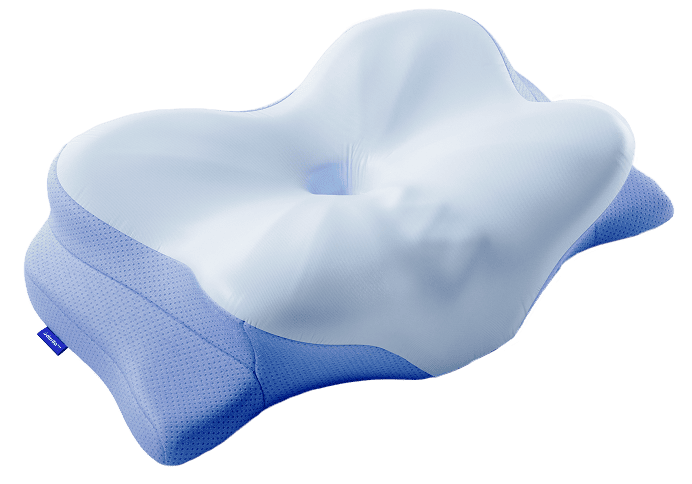
Derila Ergo contoured pillow
A contoured memory foam cervical pillow with a raised neck lip and adjustable height — low for back sleeping, higher for side or three-quarter sleeping. Our full review covers who it suits and how to set the height for each position.
- 60-night money-back guarantee, counted from delivery
- Up to 70% off currently
- 3 free bonuses included
- OEKO-TEX certified cover
Is sleeping semi-reclined a real option for shoulder pain?
Yes, and it's the most useful advice on this page for anyone whose shoulder pain is acute — the first days after an injury, a bursitis flare, or the weeks after a procedure.
Fully flat is when the space under the shoulder tip is narrowest. Sit up partway — roughly 30 to 45 degrees — and the arm hangs naturally again, the shoulder sits more open, and for many people the 2am wake-ups simply stop. Three ways to get there:
- A recliner. Reclined but not flat, sore arm on the armrest or a pillow in your lap, a small pillow behind the neck so your head isn't pushed forward.
- A wedge pillow in bed. A foam wedge under your back and head, a pillow under the sore arm. Kinder to the neck than most recliners.
- An adjustable bed base, if you already own one. Head up, feet slightly up, arm supported.
The trade-off is the neck. Sleep semi-reclined with your chin dropping toward your chest and you'll swap a shoulder problem for a neck one. Use a thin pillow that supports the curve of the neck rather than pushing the head forward — a contoured cervical pillow on its low side works well on a wedge — and treat the setup as temporary. Once the acute phase settles, work your way back to the positions above. Nobody should sleep in a chair for months.

If you must sleep on your side, how do you set it up?
Plenty of people simply can't sleep on their back, and telling them to keep trying isn't advice. Here's how to make side sleeping as kind to the shoulder as possible.
Get the pillow height right. This is the neck part, and it matters most for side sleepers because the pillow has to fill the whole gap between your ear and the mattress. The number comes from your shoulder width — we walk through how to measure your pillow height as a side sleeper with a tape measure. A pillow that keeps that loft under load all night matters as much as the number — a fill that has flattened by midnight puts you right back where you started.
Lie on the good side. Sore shoulder on top, always.
Use a body pillow. Top arm draped over it, top knee on it. It keeps the sore shoulder from rotating inward and keeps you off your stomach.
Give the bottom shoulder somewhere to go. Even the "good" shoulder gets compressed under you. Slide it slightly forward, bottom arm out in front, so you're lying a little behind the point of the shoulder. A contoured pillow with raised wings helps here: the wing supports the neck without the pillow being crammed under the shoulder itself.
Pillow behind your back. The one that stops you rolling onto the sore side in the night.
One note on diagnoses. Rotator cuff irritation, impingement, bursitis, and frozen shoulder all follow the same positional rules; the differences are in the rehab, not the bed. Sleep position is the part you control tonight — treatment from someone who has examined you is what changes the trajectory.
When is neck and shoulder pain a reason to stop reading and call someone?
Most night shoulder pain is mechanical and eases with the positions above and some patience. Some of it isn't. The U.S. National Library of Medicine's guide to neck injuries and disorders and its neck pain overview list the warning signs, and they apply just as much when the pain is in the shoulder:
- Numbness, tingling, or weakness running down an arm or into a hand
- Pain that started after a fall, a car accident, or any other impact
- Pain with fever, unexplained weight loss, or a headache that's new for you
- Pain that's severe, that no position relieves, or that keeps getting worse over days
- A shoulder you suddenly can't lift, especially after an injury
Any of those calls for a healthcare appointment before anything else. And if two or three weeks of position work changes nothing, that's also worth a visit — a rotator cuff that isn't settling deserves an actual diagnosis, not more towels.
The bottom line
Decide which joint is in charge tonight. Shoulder: on your back, folded towel under the sore upper arm, low pillow with real neck support. Neck: on your good side at the right pillow height, top arm on a pillow. Both: the three-quarter position with a body pillow.
Then sort out the arm: nothing overhead, nothing under the pillow, nothing tucked under your body. If the pain is acute, sleep semi-reclined for a couple of weeks. And if any warning signs are present, or three weeks of doing this right changes nothing, get the shoulder looked at.
Frequently asked questions
What is the best sleeping position for neck and shoulder pain?
It depends on which joint is worse. Shoulder: on your back with a folded towel under the sore upper arm so it doesn't drop backward, on a low pillow with support under the neck. Neck: on the side opposite the sore shoulder, with a pillow at the right height and a pillow for your top arm. Both: the three-quarter position — on your good side, rolled partway forward against a body pillow, sore arm draped over it.
Why does my shoulder hurt more at night than during the day?
Three things change when you lie down. Standing, the weight of your arm pulls the upper arm bone downward and opens the narrow space where the rotator cuff tendons and bursa sit; lying flat removes that pull, and lying on the shoulder compresses the space from outside. In a quiet, dark room there's nothing to distract you from the ache, so it feels sharper. And inflamed tissue stiffens when it's still, which is why the pain often wakes you an hour or two in rather than at bedtime.
Should I sleep on the side that hurts or the opposite side?
The opposite side, almost always. Lying on the painful shoulder puts your body weight directly on the irritated tendons and bursa. Sleep on the good side with the sore arm draped forward over a pillow so it can't rotate inward, and put a firm pillow behind your back so you don't roll over in the night. If both shoulders hurt, back sleeping with arm support or the three-quarter position is the answer.
Can sleeping on your side cause rotator cuff problems?
The research shows an association, not a cause. A 2024 case series in Arthroscopy, Sports Medicine, and Rehabilitation found that 52 of 58 patients with rotator cuff tears were side sleepers, but it's Level IV evidence: it looked at people who already had tears, had no comparison group, and side sleeping is the most common position anyway. What it does support is the standard advice for a sore cuff: don't spend the night with your body weight compressing it, and never sleep with the arm overhead.
Is sleeping in a recliner bad for your neck?
It can be, if your chin drops toward your chest all night, which is what happens in most recliners without a proper neck pillow. For acute shoulder pain, sleeping semi-reclined at roughly 30 to 45 degrees is genuinely useful and often what physical therapists recommend in the first weeks. Protect the neck with a thin pillow that supports its curve, rest the sore arm on a cushion, and treat it as temporary. A foam wedge in your own bed does the same job and is usually kinder to the neck.
How we researched this article
This guide reviews the published literature and the positional advice physical therapists and orthopedic clinics commonly give, cross-checked against government health sources. It is not laboratory testing or medical advice. Manufacturer return terms come from the manufacturer's own support pages, checked in September 2026.
Sources cited in the text:
- Rotator cuff tears and the side sleeping position, 2024 case series (Level IV) — Richards et al., Arthroscopy, Sports Medicine, and Rehabilitation, PMC
- Global prevalence of neck pain, 2020 and projections to 2050 — GBD 2021 Neck Pain Collaborators, The Lancet Rheumatology, 2024, PMC
- Warning signs for neck injuries and disorders — MedlinePlus, U.S. National Library of Medicine and MedlinePlus neck pain overview
When the position isn't the problem
If you have any of the warning signs listed above, stop reading and see a healthcare professional. Better Nights is an editorial site, not a medical one. Nothing here is a diagnosis or treatment plan.
Read next
- How to sleep with neck pain — neck first
- Pillow height for side sleepers — measure the gap, then buy
- Can a pillow stop snoring? — for the back sleepers this article just created
- Cervical pillow for neck pain: the complete guide — the neck half of the problem
- Our full Derila Ergo review — rating and who it suits