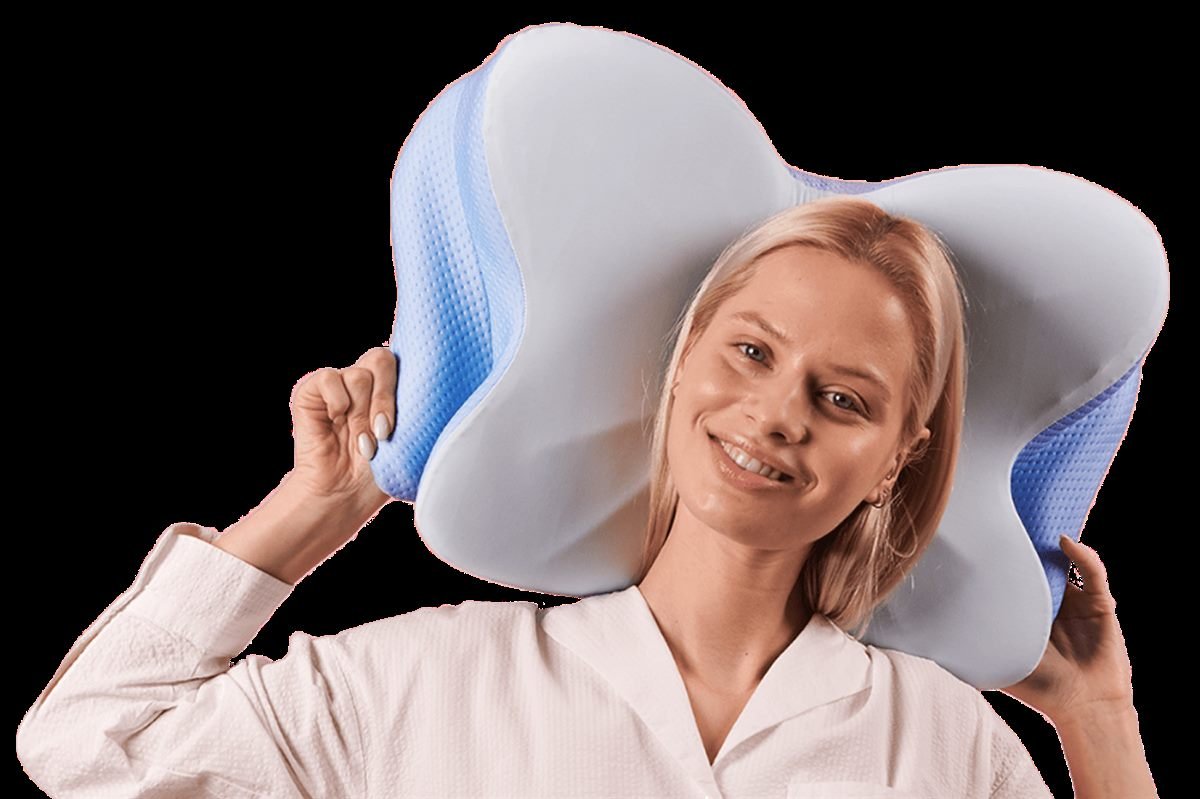
Yes, with a catch. The best pooled evidence — a 2021 meta-analysis of nine high-quality studies and 555 participants — found that pillow use reduced neck pain, waking pain and neck disability in people with chronic neck pain, and pushed satisfaction up sharply. It did not improve sleep quality. The measured pain benefit belonged to latex and spring pillows, not to memory foam, and the authors concluded that cervical alignment is driven by the shape and height of the pillow. So an ergonomic pillow works when it fits you, and "fit" is a measurement, not a brand.
Type "do ergonomic pillows really work" into Google and look at what comes back: pillow company blogs, a couple of thin niche sites, and — genuinely — patent filings from the US Patent Office. When a patent document ranks on page one for a consumer question, it's because nobody has written a proper answer yet.
So this is the proper answer: the study, the numbers including the one that flatters nobody, why a contour pillow can hurt instead of help, and what the first two weeks should feel like. We cover a contoured memory foam pillow in depth on this site; it appears where it fits the argument, and we say plainly that the studies didn't crown memory foam.
What is an ergonomic pillow, exactly?
"Ergonomic," "cervical," "contour" and "orthopedic" all point to the same idea on pillow packaging: a pillow shaped to hold your head and neck in a specific position, rather than a loose bag of fill that molds to whatever your head pushes it into.
The classic version is a molded block with a dip for the back of your skull and a raised ridge under the neck. Newer shapes add wings for side sleeping, a shoulder cutout, and often a second, taller ridge on the far edge for more loft. The material is usually memory foam or latex, because a molded shape needs a material that holds it.
What does the research actually say?
One piece of evidence outranks everything else here, and almost nobody writing about pillows mentions it.
In 2021, researchers in Hong Kong and Australia published a systematic review and meta-analysis in Clinical Biomechanics on how pillow designs affect neck pain, waking symptoms, neck disability, sleep quality and spinal alignment in adults. They pooled the nine high-quality studies, covering 555 participants (Chun-Yiu et al., Clinical Biomechanics, 2021 — PubMed).
Here's what the pooled data showed, in the study's own measures. (SMD, "standardized mean difference," compares effects across studies that used different pain scales. Negative means less pain or disability. Roughly, 0.2 is small, 0.5 medium, 0.8 large.)
| Outcome | Effect (SMD) | Significance | In plain English |
|---|---|---|---|
| Neck pain | −0.263 | P < 0.001 | Small but real reduction — the pooled pain result favored latex (rubber) pillows |
| Waking pain | −0.228 | P < 0.001 | Small but real reduction in morning pain |
| Neck disability | −0.506 | P = 0.020 | Medium-sized improvement in how much the neck limits daily life |
| Satisfaction | +1.144 | P < 0.001 | Large jump — people liked the pillows a lot |
| Sleep quality | 0.047 | P = 0.703 | No measurable effect in people with chronic neck pain |
Two things in that table deserve a closer look.
Why is the honest answer "yes, but"?
The "yes" is about pain, not sleep. Pillow design reduced neck pain, reduced morning pain, and produced a medium-sized improvement in neck disability — the measure of how much your neck gets in the way of daily life. That's the outcome most people with a sore neck are shopping for.
The "but" is sleep quality. In the study's words, pillow designs "did not influence sleep quality (SMD = 0.047; P = 0.703) in patients with chronic neck pain." If you're buying an ergonomic pillow to fall asleep faster or wake up less often, the best available evidence says don't count on it. If you're buying one because your neck hurts, the evidence is on your side.
That distinction makes the case for a good cervical pillow stronger, not weaker: judge it on your neck at 7am, not on your sleep tracker.
One more attribution detail most sites get wrong: the pooled pain benefit in the meta-analysis was found for pillows made of rubber (latex) and spring materials — not specifically for memory foam. If you read "memory foam pillows are clinically proven to reduce neck pain" anywhere, that is not what the 2021 study found. We say the same in our memory foam vs down vs latex comparison, and we cover a memory foam pillow anyway, because of the next section.
Does shape and height matter more than material?
According to the authors, yes: the 2021 review concluded that "the cervical alignment may be significantly impacted by the shape and height of the pillow." Not the brand. Not the fill. The geometry.
On your back, the goal is to fill the hollow under the curve of your neck so the muscles can switch off; on your side, it's to fill the gap between your ear and the point of your shoulder so your head isn't tilting toward the mattress. Both are questions of height and shape. Material only decides whether the pillow still has that height and shape at 4am — where molded foam and latex beat down fill and polyester.
It's also why the science can't hand you a single number. A 2021 review in Healthcare on how pillow height should be determined concluded that "there remain no firm conclusions about the optimal pillow height for the supine and lateral positions" (Lei et al., Healthcare, 2021 — PMC). The right height depends on your shoulders, your mattress and your position — not on a brand.
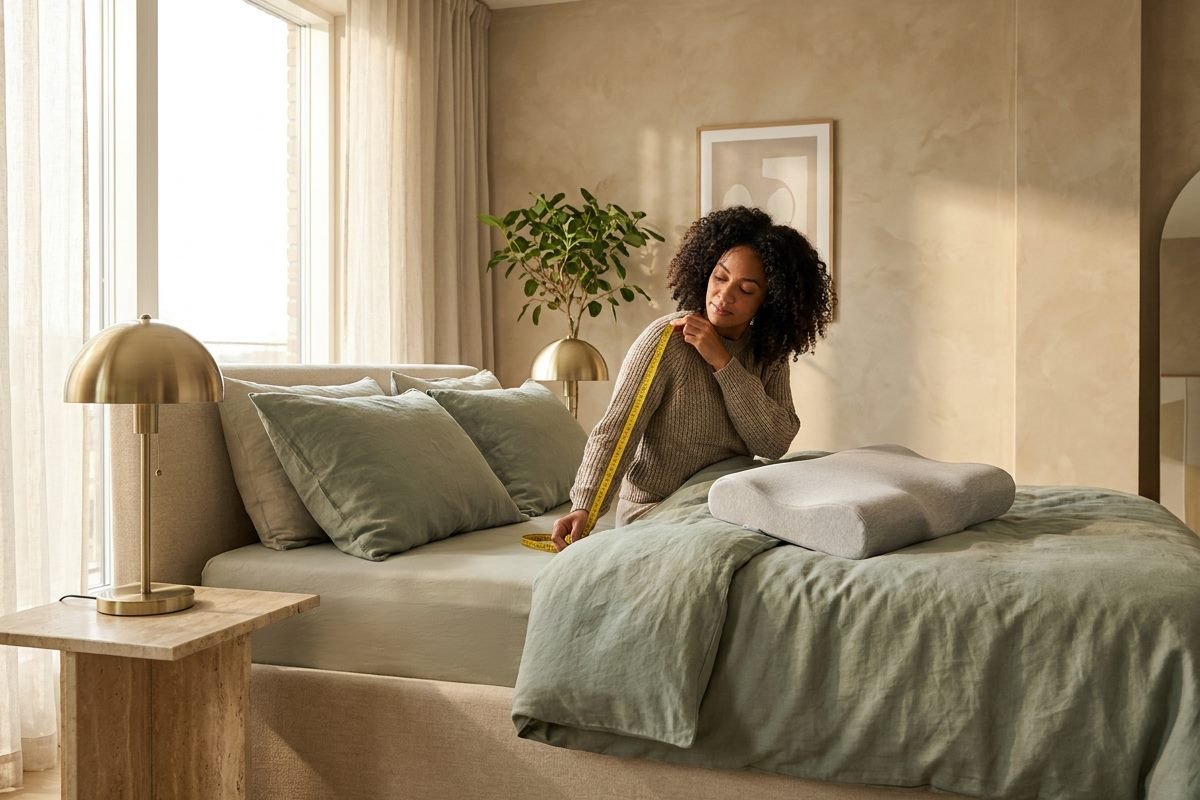
Which is why we keep saying the same thing across this site: measure first. The tape-measure method — ear to the point of the shoulder for side sleepers, a much smaller number for back sleepers — is walked through step by step in our cervical pillow guide for neck pain. Do that before you compare a single product.
Is a bad pillow really a risk factor, or just an annoyance?
It measures as a risk factor. A 2023 meta-analysis in BMC Public Health pooled studies on neck pain in college students and found that "improper use of the pillow" carried an odds ratio of 2.20 (95% CI 1.39 to 3.48) — students who used their pillow badly had roughly double the odds of neck pain (Gao et al., BMC Public Health, 2023 — PMC). One caveat: the sample is college students, so the number doesn't transfer to a 55-year-old office worker as-is. But it settles the point: the pillow shows up in the data as one of the things separating sore necks from healthy ones, and if it can hurt, a better fit can help.
Why does my contour pillow hurt my neck?
If a cervical pillow makes your neck worse, it's almost always one of five things.
- The height is wrong for your shoulders. Too tall for a back sleeper pushes the chin toward the chest; too short for a side sleeper lets the head sag toward the mattress. Either way your neck spends the night bent, the same way every night. The fix is the measurement above, not a different brand.
- Your head is where your neck should be. Most people lie on a contour pillow like a normal one, with the raised ridge under the skull. The ridge is for the neck: your head sits in the dip, the ridge fills the curve under your neck, and your shoulders touch the pillow's bottom edge.
- It's flipped. Most contour pillows have a low ridge and a high ridge. A back sleeper with the high ridge under the neck is overextended all night. Try it the other way first.
- You change position and the pillow doesn't. A contour built purely for back sleeping has nowhere to put a side sleeper's shoulder. If you switch sides in the night, you need raised wings or a shoulder cutout.
- You're on day three. Which brings us to the section every brand page skips.
How long does it take to get used to a cervical pillow?
One to two weeks, and the first few nights can feel worse before they feel better. Brand websites tend to leave this out — several we read don't mention adjustment once — because "your neck may ache for a few nights" is bad for the checkout button. It's also true, and knowing it stops people from throwing out a correct pillow on night two.
Night 1: strange is expected
Your neck has spent years on a shape your muscles memorized; a pillow that holds it somewhere different feels wrong, like new orthotics. Firmer than expected, "too high" or "too low" by feel, and mild morning stiffness are all normal. What's not normal: sharp pain, tingling into an arm, or a headache that wasn't there before. Those mean stop, not push through.
Nights 2 to 4: the awkward stretch
This is when most returns happen, and it's the worst time to judge. Mild aching that eases within an hour of getting up is normal; so is waking more than usual. Memory foam is also still settling into its true feel.
Week 2: the verdict
By the end of two weeks, a pillow that fits should feel neutral — morning stiffness is no worse than before, usually better. If you're 14 nights in and your neck is consistently worse than it was on your old pillow, the pillow is wrong for you. Usually it's the height, so check the measurement before you blame the concept.
That two-week window is why the return terms matter more than any spec on the box. A 14-day return policy gives you zero nights to judge fairly. The Derila Ergo we cover gives you 60 nights counted from delivery, four full adjustment periods with room to try both ridge heights.
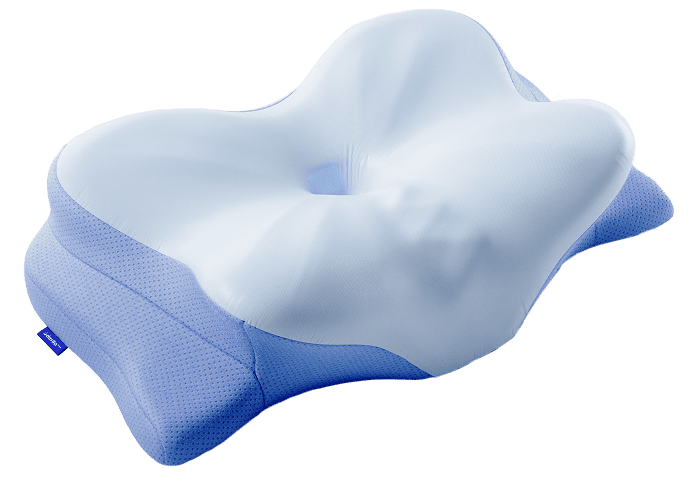
Derila Ergo contoured pillow
A contoured memory foam pillow with a neck ridge, a dipped center for back sleeping, raised wings for side sleeping and two heights to flip between. Our full review covers who it fits — and who it doesn't.
- 60-night money-back guarantee from delivery
- Up to 70% off currently
- 3 free bonuses included
- OEKO-TEX certified cover
Is an ergonomic pillow better than a regular pillow?
For someone with neck pain who sleeps on their back or side: on the evidence, yes, provided the height fits. A standard polyester pillow has no design — it's the same height everywhere and flattens through the night — so it can't hold a curve on purpose.
For someone without neck pain, the answer is more modest. If you wake up fine on the pillow you've got, the studies don't hand you a reason to switch today. The case changes the moment mornings start feeling stiff, or your current pillow flattens out.
For stomach sleepers, no. A contour pillow's ridge lifts the head of someone lying face-down and adds extension to a neck already turned 90 degrees. Stomach sleepers need a very flat, soft pillow or none at all — we go into it in the neck pain guide.
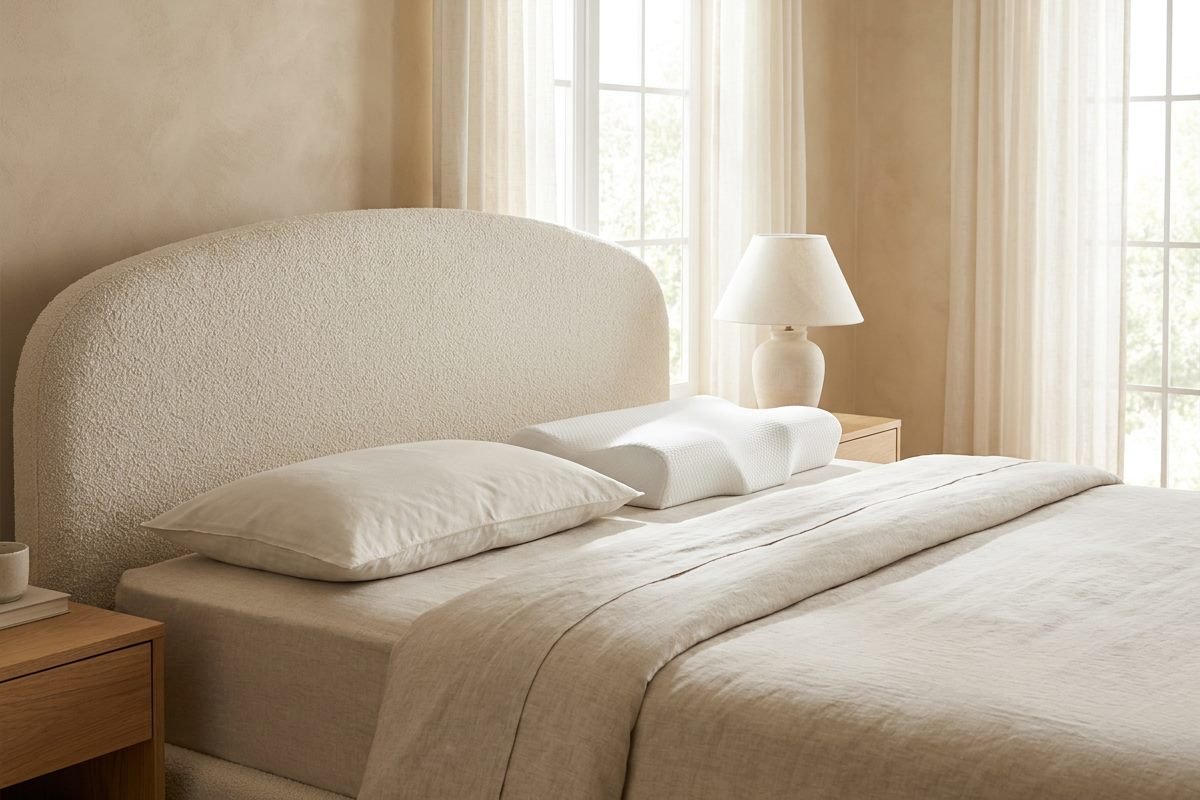
Contour pillow pros and cons, honestly
What a well-fitted contour pillow does well
- Holds the neck in its curve all night. The molded ridge doesn't migrate or flatten, so the support at 4am is the support you went to sleep with.
- Reduces pain and disability in people with chronic neck pain — small-to-medium effects in the pooled evidence above, with latex and spring pillows carrying the measured pain result.
- Works for back and side sleepers on the same pillow if the shape has wings or a shoulder cutout.
- Lasts. Molded foam and latex keep their shape for two to three years or more, versus around a year for polyester.
What to go in knowing
- It won't necessarily improve your sleep quality. Expect a better neck, not deeper sleep.
- The first one to two weeks can feel worse. Plan for it and buy with a return window that covers it.
- Fit is everything. The same pillow is a relief for one person and a problem for another because their shoulders differ. Measure.
- Firmer than you're used to. A molded pillow can feel like equipment for a while.
- Memory foam runs warm unless ventilated. Look for perforated foam and a breathable cover if you sleep hot.
- It's the wrong tool for stomach sleepers, full stop.
Most of those cons are conditions with fixes — the measurement, the two-week window, ventilated foam, a long guarantee. The only hard no is sleeping face-down.
Who should not use a contour pillow?
Skip it, or talk to someone first, if:
- You sleep only on your stomach. Every feature of a contour pillow works against that position.
- You have a diagnosed neck condition — disc problems, cervical arthritis, radiating nerve symptoms, a recent injury. Ask whoever is treating you before changing your pillow.
- You have numbness, tingling or weakness in an arm or hand, neck pain after an impact, or pain with fever or unexplained weight loss. That's a doctor's problem, not a pillow's.
- You won't measure and won't wait. A contour pillow bought at a guessed height and judged on night two is the most common way to conclude "ergonomic pillows don't work." They do; that one didn't fit.
If you do test one, know the return terms first
On the Derila support pages, the 60-night guarantee is counted from the day the parcel is delivered, not the day you order. To return it, email support@derila.com and request an RMA number first — parcels sent back without one aren't processed. Return shipping is at your cost. Once the warehouse receives the pillow, the refund is issued within 14 days and usually lands 3 to 5 business days after that. Terms can change, so read them on the order page before you buy.
The bottom line
Do ergonomic pillows really work? For neck pain, the best pooled evidence says yes: less pain, less morning pain, a medium-sized improvement in neck disability, and people noticeably happier with their pillow. For sleep quality, the same evidence says no measurable effect. And on which pillow to buy, the researchers' conclusion is that shape and height drive the result far more than material.
So buy one if your neck hurts and you sleep on your back or side. Measure your loft first. Put your neck on the ridge, not your head. Give it two full weeks, and buy it somewhere with enough nights to send it back if week two says no.
Frequently asked questions
Do ergonomic pillows actually work for neck pain?
Yes, according to the best pooled evidence. A 2021 meta-analysis in Clinical Biomechanics of nine high-quality studies and 555 participants found that pillow design reduced neck pain (SMD −0.263), waking pain (−0.228) and neck disability (−0.506), and raised satisfaction sharply, in adults with neck pain. The strongest measured benefit was for pillows made of latex and spring materials, and the authors concluded that the shape and height of the pillow are what drive cervical alignment. It only works if the height fits your shoulders and position.
How long does it take to get used to a cervical pillow?
One to two weeks for most people. Night one usually feels strange and firmer than expected; nights two to four are often the most awkward; by the end of week two a pillow that fits should feel neutral. If your neck is consistently worse after 14 nights than on your old pillow, the pillow is wrong for you — usually the height — so buy from somewhere with a return window longer than two weeks.
Why does my contour pillow make my neck hurt?
Almost always one of five things: the height is wrong for your shoulder width; your head is on the neck ridge instead of in the dip; the pillow is flipped so the taller ridge is under your neck; the shape has no room for a side sleeper's shoulder when you change position; or you're still inside the first two weeks of adjustment. Check the measurement and your position on the pillow before blaming the concept. Sharp pain, tingling into an arm, or a new headache are not adjustment — stop using it.
Is an ergonomic pillow better than a regular pillow?
For back and side sleepers with neck pain, the evidence says yes, provided the height fits — pillow design measurably reduced pain and disability in pooled studies. For people without neck pain, there's no strong evidence for switching today — the case changes the moment mornings start feeling stiff or your current pillow flattens out. For stomach sleepers, a contour pillow is the wrong tool: its ridge lifts and extends a neck that's already rotated.
Who should not use a contour pillow?
Stomach sleepers, because every feature of the shape works against that position. Anyone with a diagnosed neck condition — disc problems, cervical arthritis, nerve symptoms, a recent injury — should follow their treatment and ask their clinician before changing pillows. And anyone with numbness or weakness in an arm or hand, neck pain after an impact, or pain with fever or unexplained weight loss should see a doctor, not buy bedding.
Do ergonomic pillows improve sleep quality?
Not measurably, in people with chronic neck pain. The 2021 meta-analysis found that pillow design did not influence sleep quality (SMD 0.047, P = 0.703) even though it reduced pain and disability. In practice, expect a better neck in the morning, not necessarily deeper or longer sleep.
Does the material of an ergonomic pillow matter?
Less than the shape and height. The 2021 review concluded that shape and height drive cervical alignment, and the pooled benefit was found for latex and spring pillows rather than memory foam specifically. Material mainly decides whether the pillow still holds its shape at 4am — molded memory foam and latex do, down and polyester don't — and how warm it sleeps.
How we researched this article
This article is a review of the published literature plus manufacturer specifications and publicly available customer feedback. It is not laboratory testing and it is not medical advice.
Sources cited in the text:
- Pillow designs, neck pain, disability and sleep quality — Chun-Yiu et al., systematic review and meta-analysis, Clinical Biomechanics, 2021 (PubMed)
- Determinants of pillow height — Lei et al., Healthcare, 2021 (PMC)
- Improper pillow use as a neck pain risk factor — Gao et al., BMC Public Health, 2023 (PMC)
When the pillow isn't the problem
If you have numbness, tingling or weakness running into an arm or hand, neck pain after any impact, pain with fever or unexplained weight loss, or severe pain no position relieves, stop shopping and see a healthcare professional. Nothing here is a diagnosis or treatment plan.