
Sleep on your back or your side with your nose lined up over the center of your chest, and use a pillow that fills the gap under your neck without pushing your head up. If your neck already hurts tonight, roll a hand towel into the bottom edge of your pillowcase, apply heat for 15 to 20 minutes before bed, and try lying semi-reclined for the first hour. Stomach sleeping is the position to work away from — and below there's a two-week plan for doing it.
Neck pain is not a niche complaint. The Global Burden of Disease study estimated that 203 million people worldwide were living with neck pain in 2020, and projected that number to reach 269 million by 2050 (GBD 2021 Neck Pain Collaborators, The Lancet Rheumatology, 2024). A lot of those people are lying awake right now, trying to find the one angle that doesn't hurt.
So this guide runs in the order a bad night actually runs: the next two hours, then a free neck support made from a towel, then the positions, then the part nobody writes — how to actually stop sleeping on your stomach. Pillows come last, because a pillow is the long-term fix and tonight is the short-term one.
What should you do tonight if your neck already hurts?
Forget optimizing. You're not choosing a sleep position for life right now; you're choosing one for the next eight hours with a neck that's already unhappy. Here's the order of operations.
1. Heat before bed, not during. Fifteen to twenty minutes under a warm shower, or with a heating pad or a microwavable heat pack on the back of your neck, loosens the muscles guarding the sore spot. Take it off before you lie down — falling asleep on a heating pad is a burn risk. If the pain started with an obvious tweak in the last day or two and the area feels hot or swollen, cold for 10 to 15 minutes is the more common first-aid call; for the stiff, achy kind, most people find heat more comfortable. Try one, switch if it doesn't help.
2. Find the rescue position. On your back, with a rolled towel under the curve of your neck (details in the next section) and a pillow under your knees so your lower back relaxes. For many people in a flare-up, this is the only position where the neck muscles fully let go. If lying flat is too much, prop a wedge or a stack of pillows behind your shoulders and back — not just behind your head — so you're semi-reclined at roughly the angle of an armchair. Sleeping in a recliner for a night or two is not a failure.
3. Make the pillow lower, not higher. The instinct when your neck hurts is to build up the pillows. That's usually backward. Harvard Health's advice is blunt: "Avoid using too high or stiff a pillow, which keeps the neck flexed overnight and can result in morning pain and stiffness" (Harvard Health Publishing). If you're a back sleeper tonight, one pillow with the towel roll beats two pillows every time.
4. Don't fight it. Slow chin tucks and gentle turns are fine; stretching hard into the pain or cracking your neck isn't. And if you're still awake after 20 or 30 minutes, get up, sit somewhere dim with the heat pack on again, and go back to bed when you're drowsy.
If you already woke up this morning with a neck that wouldn't turn, the causes are slightly different from the ones that keep you from falling asleep — we ranked them in why you wake up with a stiff neck every morning.
How do you make a rolled-towel neck support?
This is the most useful trick in the article, it costs nothing, and it's almost completely missing from the big neck pain guides. Harvard gets closest when it recommends a rounded pillow under the natural curve of the neck. A towel does the same job tonight.
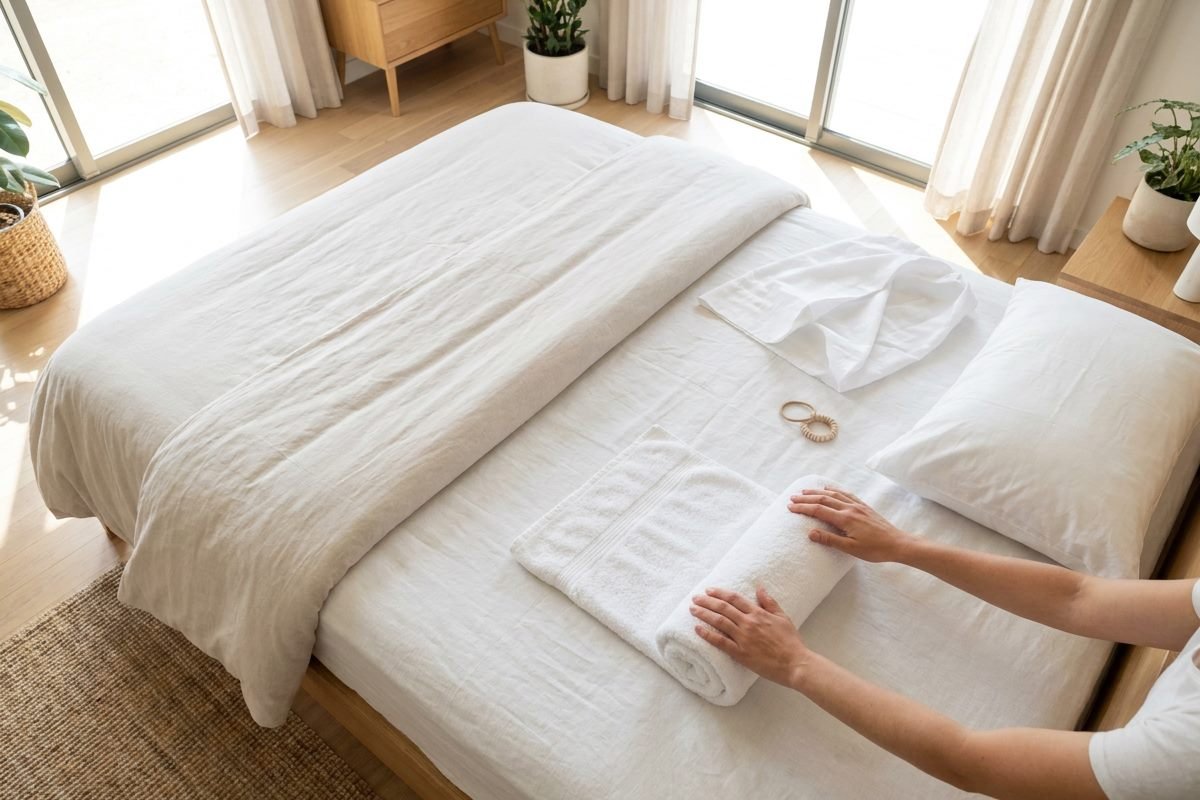
- Take a regular hand towel — not a bath towel, which is too thick, and not a washcloth, which is too small.
- Fold it in half lengthwise, then roll it tightly from the short end into a cylinder about 4 inches (10 cm) across. If your neck is small or you're sleeping on a fairly soft pillow, go closer to 3 inches (7–8 cm).
- Secure it with a couple of rubber bands or hair ties so it doesn't unroll at 3am.
- Slide it inside the pillowcase along the bottom edge of your pillow — the edge closest to your shoulders. Inside the case, not on top of it, so it stays put when you move.
- Lie back so the roll sits in the hollow of your neck and the rest of your head rests on the flatter part of the pillow. Your chin should be level, not pointing at the ceiling and not tucked toward your chest.
What you've built is the shape of a cervical pillow: a raised edge under the neck, a lower cradle for the skull. That's why the towel works, and it's also why it eventually stops being enough — a towel flattens, migrates, and has to be rebuilt every night. A contoured cervical pillow does this shape for you, out of the box, in molded foam that holds it until morning. We cover how to choose one, including how tall the raised edge needs to be for your build, in the complete cervical pillow guide.
Which sleeping positions help neck pain, and which one makes it worse?
Every guide agrees on the ranking, and the ranking is right: back and side are good, stomach is the problem. The useful part is the detail inside each one.
On your back: the gentlest position, if the pillow is low
Lying on your back asks nothing of your neck except to keep its natural curve, and the pillow's job is to support that curve, not lift the head. Harvard's version: a rounded pillow to support the neck, with a flatter pillow cushioning the head — exactly what the towel roll or a contoured pillow gives you. Add a pillow under your knees; it takes the arch out of your lower back and lets the whole spine, neck included, settle.
The check: have someone look at you from the side. Chin pushed down toward your chest means the pillow is too high; chin tipped up and throat stretched means it's too low or has gone flat.
On your side: great for the neck, but only with the right height
Side sleeping is perfectly good for a sore neck, and for many people more comfortable than lying flat. The catch is height. On your side, the pillow has to fill the entire gap between your ear and the point of your shoulder, so side sleepers need a noticeably taller pillow than back sleepers. Too low and your head sags toward the mattress; too high and it's bent up toward the ceiling. Either way, that's a neck held bent for seven hours.
Add a pillow between your knees so your top hip doesn't roll forward and twist the spine, and keep your top arm in front of you or hugging a pillow, not under your head. Broad shoulders or a firm mattress push the height up; a soft mattress that lets your shoulder sink pulls it down. We walk through measuring it in pillow height for side sleepers.
On your stomach: the one to move away from
Face-down sleeping forces your head to turn 90 degrees to one side so you can breathe, and holds it there for hours. No pillow fixes rotation, and the position also flattens the neck curve and arches the lower back. If you're a stomach sleeper with neck pain, this is almost certainly a bigger factor than your pillow. If you can't change tonight: thinnest pillow you own or none, a thin pillow under your hips, and the plan below starting tomorrow.
| Position | Pillow height | Add | Watch for |
|---|---|---|---|
| Back | Low to medium, with support under the neck curve | Pillow under the knees; towel roll or contoured pillow | Chin pushed toward chest = too high |
| Side | Taller — fills the ear-to-shoulder gap | Pillow between the knees; top arm hugging a pillow | Head sagging toward the mattress = too low |
| Stomach | Thin or none | Thin pillow under the hips | Head rotated for hours; work toward side sleeping |
Does it matter whether you sleep on your right or left side?
For the neck itself, no. Left and right ask the same thing of your cervical spine. But three practical things break the tie.
The side that hurts. If the pain sits mostly on one side of your neck, most people find it easier to sleep on the opposite side, so the sore muscles aren't compressed between head and pillow all night. Try it for a few nights before you decide. Reflux. If you also get heartburn at night, left-side sleeping is the position commonly suggested to keep stomach contents lower than the esophagus — a digestion decision, not a neck one, but a reasonable tiebreaker. The dominant shoulder. Plenty of right-handed people sleep on the same shoulder they lean on all day; if that one aches, switching to the left for a few weeks gives it a break. Neck and shoulder pain together has its own arm-position rules, and we cover it in the guide to sleeping with neck and shoulder pain.
Whichever side you pick, the rules don't change: pillow tall enough to fill the shoulder gap, pillow between the knees, top arm in front of you.
How do you actually stop sleeping on your stomach?
"Avoid stomach sleeping" is in every article on this subject. How to do it is in none of them. You can't decide your way into a new sleep position — you're unconscious for the part that matters — so the job is to make the old position awkward and the new one easy, and repeat until your body relearns. Two weeks is realistic for most people.
Nights 1–3: block the roll
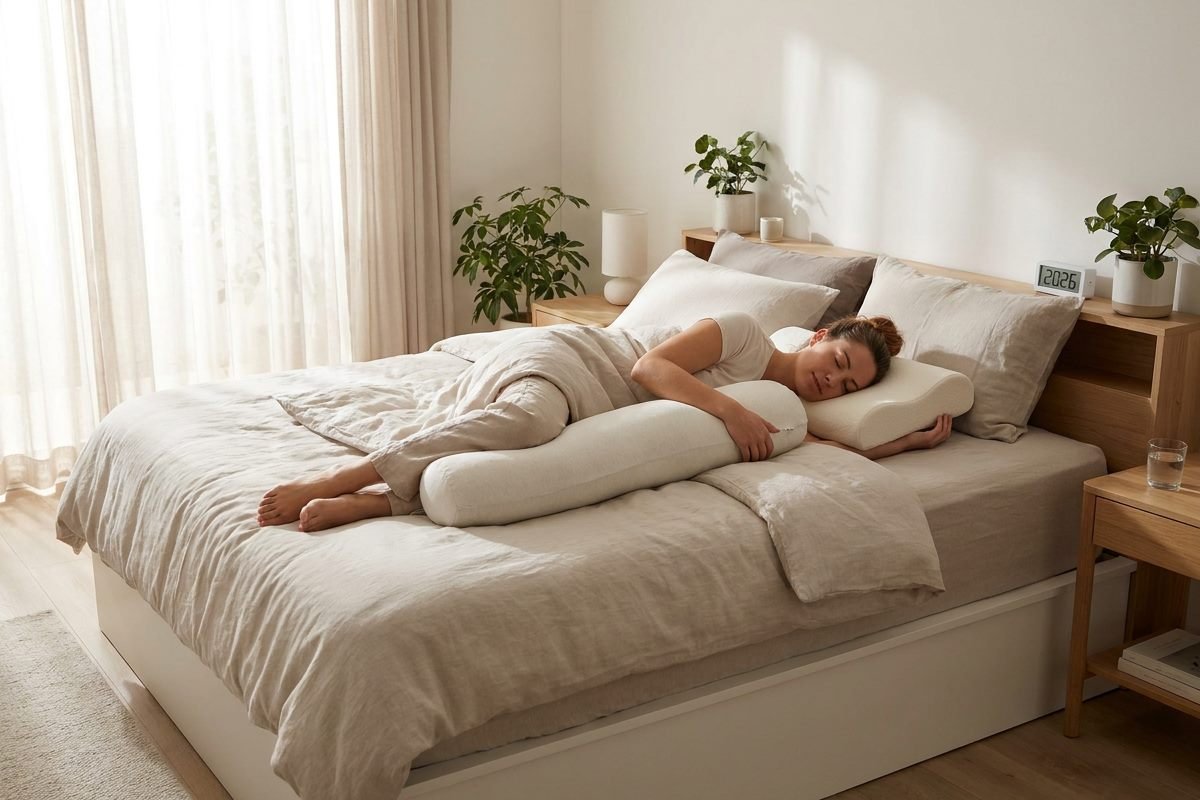
- Start the night on your side, facing a full-length body pillow (a rolled blanket works) and hug it with your top arm and top knee. That's the position your body wants when it goes face-down — you're giving it the same feeling without the rotation.
- Put a second firm pillow behind your back, wedged against you, so rolling backward is uncomfortable too.
- Use a side-sleeper-height pillow, not your old flat stomach pillow. A flat pillow makes side sleeping feel wrong, which is exactly what sends you back onto your stomach.
- Expect to wake up face-down anyway. Roll back onto your side, re-hug the pillow, go back to sleep. Every reset is a repetition.
Nights 4–7: make face-down uncomfortable
- The old trick works: a tennis ball in the front pocket of a snug T-shirt. You'll roll onto it, it'll wake you slightly, and you'll roll back. Uncomfortable is the point.
- Keep the body pillow and the pillow behind your back. By the end of this week most people wake up on their side more often than not.
Nights 8–14: remove the scaffolding
- Take away the back pillow first, then the tennis ball once you've had three or four mornings in a row on your side.
- Keep the body pillow as long as you like. Plenty of lifelong side sleepers use one permanently; it also does the between-the-knees job.
The honest part: some people take longer, and a few never fully switch. Even for them, cutting stomach-sleeping from eight hours a night to two is a big change for the neck. Track it with a one-word note on your phone each morning, because progress in sleep habits is invisible unless you write it down.
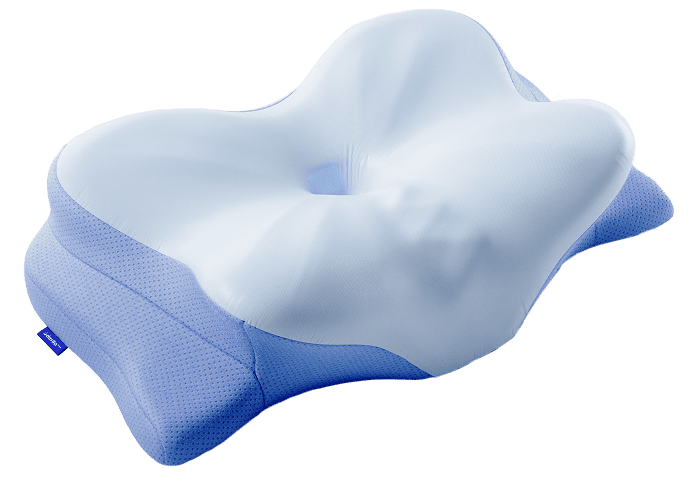
Derila Ergo contoured pillow
A molded memory foam pillow with the shape the towel roll imitates: a raised edge under the neck, a dipped center for the head, and wings for side sleeping. Adjustable height, so back and side sleepers can dial it in. Our full review covers who it suits.
- 60-night money-back guarantee, counted from delivery
- Up to 70% off currently
- 3 free bonuses included
- OEKO-TEX certified cover
How much does your pillow really matter?
More than most people assume, and there's a number for it now.
A 2023 systematic review and meta-analysis in BMC Public Health pooled 30 studies covering 18,395 college students and ranked the risk factors for neck pain. Improper use of the pillow came out with an odds ratio of 2.20 — in plain English, students using their pillow badly had a little more than double the odds of neck pain (Gao et al., BMC Public Health, 2023). In the same analysis, lack of exercise came in at 1.88 and long periods with the head bent down at 2.04. The pillow was the strongest of the group.
Two honest caveats. The participants were college students, so we won't pretend the exact number applies to a 55-year-old. And "improper use" covers height, firmness and positioning — not a brand or a material. But the direction is clear: the object your neck spends a third of its life on is a measurable risk factor, not a detail. "Proper use" is the same thing we've been building all article:
- The right height for your position. Low to medium on your back, taller on your side. One pillow rarely does both unless it's contoured or adjustable.
- Support under the neck, not just under the head. The towel-roll shape.
- Height that's still there at 4am. Down and cheap polyester collapse under a head; molded foam and latex hold. We compared them in memory foam vs down vs latex.
- Head in the cradle, neck on the ridge. A cervical pillow used backward is "improper use" in a brand-new pillow.
This is where a contoured, adjustable cervical pillow earns its place after the towel-roll phase. The Derila Ergo, the one we've reviewed most closely, is molded memory foam with the neck ridge and head cradle built in, and its height adjusts so a back sleeper and a side sleeper can both get to the right number. It's bedding doing a positioning job, and its 60-night return window (counted from delivery) exists for a practical reason: the first couple of weeks on any contoured pillow feel unfamiliar while your neck adjusts. If yours feels worse after two weeks, it's usually the height, not the concept — adjust it down before you write it off.
Why is neck pain worse in the morning and better during the day?
This pattern — stiff on waking, easing by lunchtime — points straight at the night. Muscles and joints stiffen when they're held still for hours, and if the position also bends the neck (a pillow that's too high, a head rotated on the stomach, a head sagging off a collapsed pillow) you wake with muscles that spent all night strained. Moving warms them up, and by mid-morning the pain fades. Then you go back to the same pillow and do it again.
Worse in the morning, better by afternoon: the problem is your position, your pillow, or both — good news, because both are fixable at home. The reverse pattern, pain that builds through the day, points more toward desk posture and screen time. Pain that's bad all day and doesn't shift with position belongs in the section below.
What else in the bedroom makes neck pain better or worse?
The mattress. Too soft, and your hips sink and your spine curves, which changes where your head needs to be. Most people with neck or back pain do better on a medium-firm surface. Screens in bed. Your head hangs forward over a phone for the last 30 minutes of the day, and then you lie down with those muscles already tired; the 2023 meta-analysis flagged long periods with the head bent down as one of the stronger risk factors (odds ratio 2.04). Prop the phone at eye level or leave it on the nightstand. A four-minute wind-down. Heat, then slow chin tucks, gentle turns and shoulder rolls, then bed.
When should you see a doctor about neck pain from sleeping?
Most sleep-related neck pain is muscular, and it improves within a few days to a couple of weeks once the position and pillow are fixed. See a healthcare professional sooner if:
- The pain follows a fall, a collision or any impact.
- You have numbness, tingling or weakness running into an arm or hand.
- The pain comes with fever, headache with a stiff neck, or unexplained weight loss.
- It's severe and no position relieves it.
- It's still there after two or three weeks of doing everything in this article.
Everything here — the towel, the position change, a better pillow — is about sleep positioning and bedding, for the very common situation where the night itself is the cause. A diagnosed condition belongs with your clinician.
The bottom line
Tonight: heat, a rolled towel under the curve of your neck, a lower pillow than instinct says, semi-reclined if flat is too much. This week: back or side, knees supported, pillow height matched to the position, and the body-pillow plan if you sleep on your stomach. Then, once the flare-up passes, replace the towel with something built to hold that shape all night — because the study that put a number on it found the pillow was the strongest risk factor on the list. Position first, pillow second. Then give it two weeks before you judge either one.
Frequently asked questions
What is the fastest way to relieve neck pain at night?
Apply heat to the back of the neck for 15 to 20 minutes before bed, then lie on your back with a rolled hand towel tucked inside the pillowcase under the curve of your neck and a pillow under your knees. Keep the pillow low rather than stacking pillows. If lying flat is too painful, sleep semi-reclined on a wedge or in a recliner for a night or two until the flare-up settles.
Should I sleep without a pillow if my neck hurts?
Only if you sleep on your stomach, where a thin pillow or none keeps your head from being propped up as well as turned. On your back or side, no pillow leaves the neck unsupported: on your back the head tips backward, and on your side it sags toward the mattress. What most sore necks need is a lower pillow with support under the neck curve, not no pillow at all.
Is it better to sleep on your back or your side with neck pain?
Both work; stomach sleeping is the one to avoid. Back sleeping is the gentlest as long as the pillow is low and supports the curve of the neck. Side sleeping is fine too, but the pillow must be tall enough to fill the gap between your ear and your shoulder, with a pillow between the knees. Pick the one you can actually stay in all night, and match the pillow height to it.
Why is my neck pain worse in the morning and better later in the day?
Because it's being caused overnight. Muscles held in a bent or strained position for hours stiffen and ache on waking, then loosen as you move and blood flow returns. That pattern points to your sleep position or pillow — too high, collapsed, or a head rotated on the stomach. Pain that builds through the day instead points more toward posture and screen time than to bedding.
How long should neck pain from sleeping wrong last before I see a doctor?
Muscular neck pain from a bad night usually eases within a few days and should be clearly better within two to three weeks once the position and pillow are fixed. See a healthcare professional sooner if the pain followed an impact, if you have numbness, tingling or weakness in an arm or hand, if there's fever or a headache with a stiff neck, or if the pain is severe and no position relieves it.
How we researched this article
This guide is a review of the published literature plus practical positioning advice that physical therapists commonly give. It is not laboratory testing and it is not medical advice. Product details for the pillow we mention come from the manufacturer's own pages, checked in August 2026.
Sources cited in the text:
- Risk factors for neck pain in college students, systematic review and meta-analysis — Gao et al., BMC Public Health, 2023
- Global burden of neck pain 1990–2020 and projections to 2050 — GBD 2021 Neck Pain Collaborators, The Lancet Rheumatology, 2024
- "Say 'good night' to neck pain" — Harvard Health Publishing
When the position isn't the problem
If you have numbness, tingling or weakness running into an arm or hand, neck pain after any impact, pain with fever or unexplained weight loss, or severe pain no position relieves, stop reading sleep guides and see a healthcare professional. Better Nights is an editorial site, not a medical one. Nothing here is a diagnosis or treatment plan.
Read next
- Why you wake up with a stiff neck every morning — seven causes, ranked
- Cervical pillow for neck pain: the complete guide — the towel-roll shape, built in
- Pillow height for side sleepers — measure, then buy
- Our full Derila Ergo review — rating, who it suits, and how to dial in the height