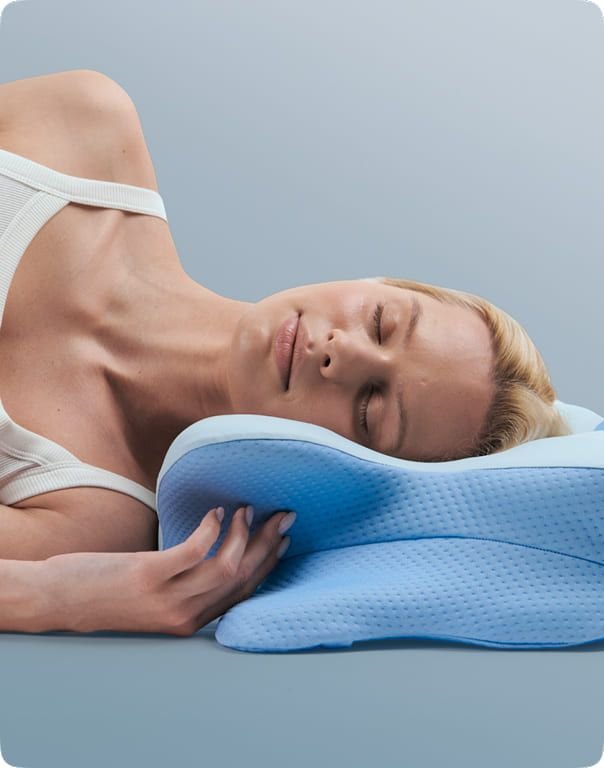
Measure the vertical gap from your mattress to the side of your neck while lying on your side. That gap is the height your pillow must hold. Most side sleepers land between 10 and 14 cm (4 to 5.5 in). Firm mattresses need more height, soft ones less. Height decides comfort far more than material does.
Side sleeping is the default position for most adults. A March 2025 survey of US adults run by the National Council on Aging with Pollfish put it at 63%, and 74% of those side sleepers reported pain they connect to how they sleep (NCoA, 2025). It is the position most people default to, and it is also the one where a bad pillow does the most damage.
Here is why. On your back, the gap you need to fill is the small hollow behind your neck. On your side, the gap is the whole width of your shoulder. If your pillow is not tall enough to bridge it, your head hangs toward the mattress and your neck bends sideways for seven hours.
How much height does a side sleeper actually need?
Most side sleepers need something in the range of 4 to 6 inches (about 10 to 15 cm) of firm, supported height. Broad shoulders push you toward the top of that range. Narrower shoulders and a softer mattress push you toward the bottom.
That range is a starting point, not your answer. Research published in 2024 went further and derived optimal pillow height from shoulder width rather than from height, weight or what people said they liked (study, PubMed). Two numbers came out of it:
- 9.7 to 11.8 cm (3.8 to 4.6 in) gave the best cervical alignment — the straightest neck.
- 11.8 to 13.8 cm (4.6 to 5.4 in) scored highest for comfort — what people preferred.
The two bands only partly overlap, which is quietly the most useful finding on this page: the height that aligns your neck best is a little lower than the height that feels best. If you have broad shoulders you belong at the top of both ranges; if you are narrow-shouldered, the bottom. And if you have been buying "extra loft" pillows because you are a side sleeper and the internet said so, you may have overshot.
Note the word supported. A soft down pillow can measure 6 inches on the shelf and compress to two under the weight of a head. What counts is the height it holds at 4am, not the height on the label.
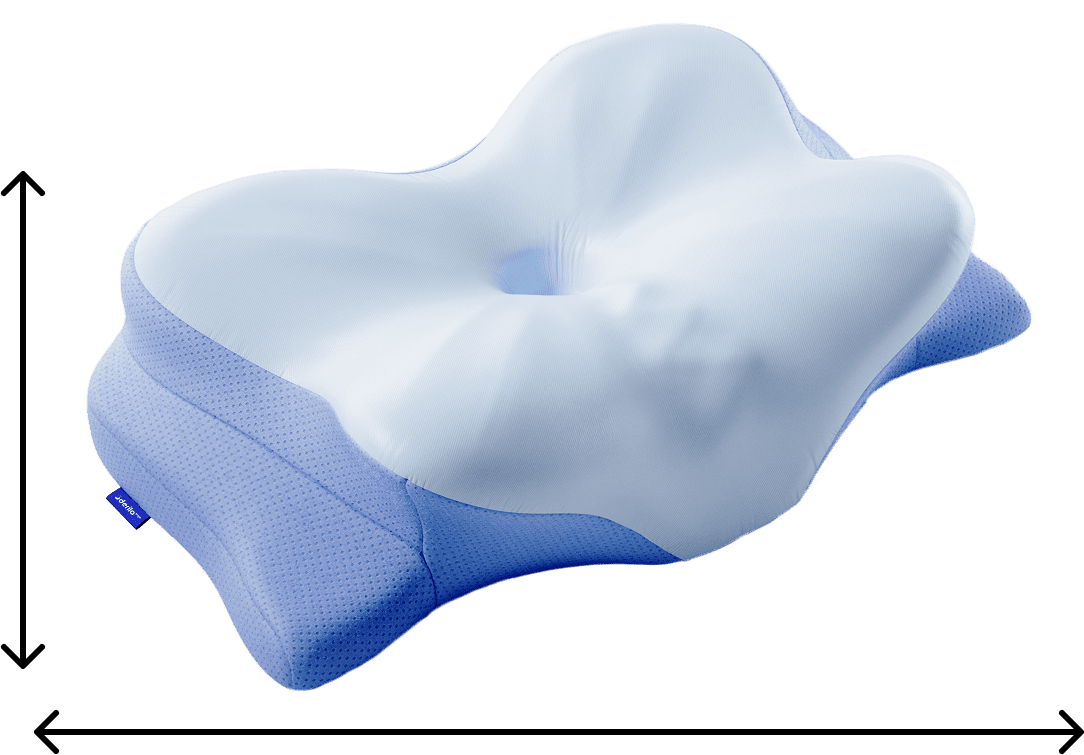
The two-minute measurement: find your number with a tape measure
- Lie on your side with no pillow at all, on the mattress you actually sleep on, arms relaxed in front of you.
- Have someone measure straight up from the surface of the mattress to the side of your neck, just below your ear. Hold the tape upright against the edge of the bed. That vertical gap is the distance your shoulder lifts your head off the bed — and it is exactly what a pillow has to fill.
- Write it down in centimetres. Most adults land between 10 and 14 cm. Under 10 means you need a lower pillow than most side-sleeper advice will push you toward. Over 14 means most shop pillows will leave your head hanging.
- Measure what you own. Press your forearm down on your current pillow with roughly the weight of a head and measure what is left. That is its working height. The number on the packaging is measured empty and is close to meaningless.
- Do the subtraction. The difference between the two numbers is how far short — or how far over — you have been sleeping, in centimetres, before you spend anything.
Then confirm it with a photograph
- Lie on your side on the setup you want to test.
- Have someone photograph you from behind, camera level with the bed.
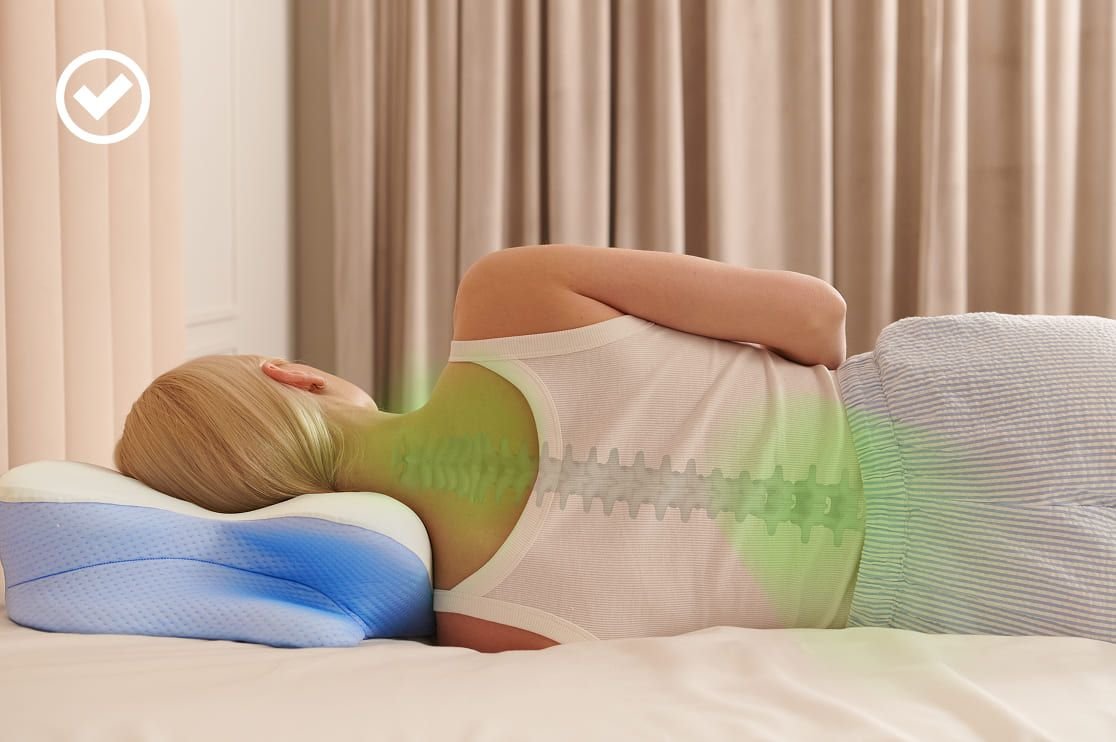
- Look at the line from your head down your spine. It should run straight, and your nose should point straight ahead, level with the middle of your chest.
- Head tipped down toward the mattress means you need more height. Ear pushed up toward your shoulder means you need less.
Use a folded towel under your current pillow to add height in known increments — a folded bath towel is roughly 2 cm a layer. That converts "it feels wrong" into a number you can shop with.
Your mattress changes the answer
This is why two people with identical shoulders need different pillows, and why the pillow that was perfect at your old flat feels wrong in a new bed.
On a firm mattress, your shoulder barely sinks in. The full width of your shoulder stays as a gap between your head and the bed, so you need more pillow height. On a soft mattress, your shoulder drops into the surface, the gap shrinks, and you need less. The same person can move between the two extremes and need a difference of several centimetres.
Two practical consequences. First, always measure while lying on the bed you sleep in — that automatically accounts for how much you sink. Second, if you have just bought a new mattress and your neck started hurting, do not blame the mattress and buy a second one. Re-measure. Your pillow height requirement almost certainly moved.
A sagging old mattress does the same thing in reverse: your shoulder and hip drop into the hollow, your spine curves like a hammock, and a pillow that was the right height is suddenly too low.
If it is your shoulder and arm going numb, not your neck
A large share of side sleepers have a second complaint the pillow articles never address: the bottom shoulder aches, or the arm goes dead in the night.
The mechanism is straightforward. Lying on your side puts your body weight through the shoulder joint, and the pressure inside the subacromial space — the narrow gap where the rotator cuff tendons run — is higher in that position than lying on your back. There is a matching pattern in the clinic: in a 2024 case series of 58 patients with non-traumatic rotator cuff tears, 52 of them — just under 90% — were side sleepers, against one back sleeper and four stomach sleepers (Richards et al., Arthroscopy, Sports Medicine, and Rehabilitation, 2024).
Be careful with what that does and does not show. It is a small, observational series: it tells you that people with cuff tears are overwhelmingly side sleepers, not that side sleeping caused the tears. Most people sleep on their side anyway. It is a reason to take a persistently sore shoulder seriously, not a reason to be afraid of your favorite position.
Three things help, and only one of them is a pillow.
- Get your head height right first. If the pillow is too low, your head drops and your neck and shoulder take extra load all night. The measurement above is step one for shoulder pain too.
- Hug a pillow in front of your chest. The top arm has to go somewhere. Left to itself it slings across your body and drags the top shoulder forward, rotating the upper spine and loading the joint you are already lying on. Give that arm a pillow to rest on and both shoulders stay square. It costs nothing, it works from the first night, and almost nobody is told to do it.
- Give the bottom shoulder room. Pull the shoulder slightly forward out from under you rather than lying directly on the joint, and use a pillow with a shoulder cut-out if you have one, so the pillow is not pushing the shoulder up into the joint.
If the numbness is in specific fingers, runs down the arm, or comes with weakness, that is a nerve sign and it needs a professional rather than a pillow.
Which pillow fill works for side sleepers?
Height is the priority, but the material decides whether you keep that height. Here is how the common options behave under a side sleeper's head.
| Fill | Holds height? | Runs hot? | For side sleepers with neck pain |
|---|---|---|---|
| Contoured memory foam | Yes — the shape is molded and fixed | Depends: solid foam does, ventilated foam much less | Best fit. Firm enough to hold the gap, and the raised wing is designed for exactly this position |
| Shredded memory foam | Mostly, and you can add or remove fill | Moderate | Good option if you want to tune the height yourself. Needs reshaping over time |
| Latex | Yes, and it is springy rather than slow | No, naturally breathable | Good, if you find memory foam too slow or too warm. Usually the priciest option |
| Down / feather | No — collapses under the head | Yes, traps heat | Worst fit. Feels lovely, then flattens to nothing by the middle of the night |
| Polyester (standard bed pillow) | Briefly, then goes flat permanently | Yes | Cheap, and the usual culprit behind morning stiffness |
The pattern is consistent: anything you can squash flat with one hand will be squashed flat by your head. For the full breakdown of every fill, see memory foam vs down vs latex.
The five specs worth checking (and the ones to ignore)
Worth checking:
- Height, under load. Everything else is secondary. 4–6 inches for most side sleepers.
- A shoulder cut-out or raised wing. A contoured pillow with a taller outer edge gives your shoulder somewhere to sit and your head somewhere higher to rest.
- Firmness. Medium-firm to firm. Side sleepers are the group that needs the least give.
- Breathability. Ventilated or perforated foam and a mesh cover. Your body needs its core temperature to fall by around 1–2°F to sleep well, and a hot head fights that.
- The return window. Any new pillow height takes about two weeks to feel normal. A 14-day return policy expires the moment you would be able to judge it. Look for 30 nights minimum, 60 is comfortable.
Safe to ignore: thread count on the cover, "cooling gel" claims with no ventilation behind them, celebrity endorsements, and any pillow that claims to cure a medical condition. A pillow is a support device.
Why the return window is the real spec
This is the practical trap. You buy a pillow, it feels strange for five nights, you assume it is wrong, and you send it back inside the 14-day window — often just before it would have started feeling right. Buying with a 60-night window removes that guesswork entirely.
What 60 nights means in practice. On Derila's own support pages, the 60 nights run from the day the parcel is delivered rather than the day you order, so shipping time does not come out of your trial — that is better than it sounds. Returns need an RMA number requested by email at support@derila.com before you send anything back, and return postage is at your cost. The refund is issued within 14 days of the warehouse receiving the pillow, and typically reaches your account 3 to 5 business days after that. Terms change, so read them on the order page.
The 14-night test that settles it
Judging a pillow by how it feels tonight is the reason people cycle through four of them and conclude that pillows are a scam. Memory is a terrible instrument, and the first three nights on a new height feel wrong even when the height is right. Write it down instead.
- Every morning, before you get out of bed, score your neck from 0 to 10. Zero is no pain, ten is the worst it has been. Do it before coffee, before your phone, before you move around — morning stiffness fades fast and you will underrate it by 9am.
- Add two words. Where it hurt, and which position you woke up in. That is all the detail you need.
- Ignore week one entirely. Nights 1 to 7 are adaptation. Diffuse ache that fades within an hour of getting up is normal.
- Decide on week two. Compare the average of nights 8 to 14 with what you were living with before. A drop of two points or more is a real result — in the published trials on adjusted pillow height, that is roughly the size of improvement people got.
- Flat or worse in week two means the height is wrong. Not that pillows do not work. Re-measure, adjust by 2 cm, or use the return window.
Fourteen mornings and a note on your phone. It is the cheapest experiment in this entire category, and it turns a purchase into a test with an answer.
What we point side sleepers toward
We are one site with one product we cover in depth, so treat this as what it is: our pick, not an exhaustive market survey.
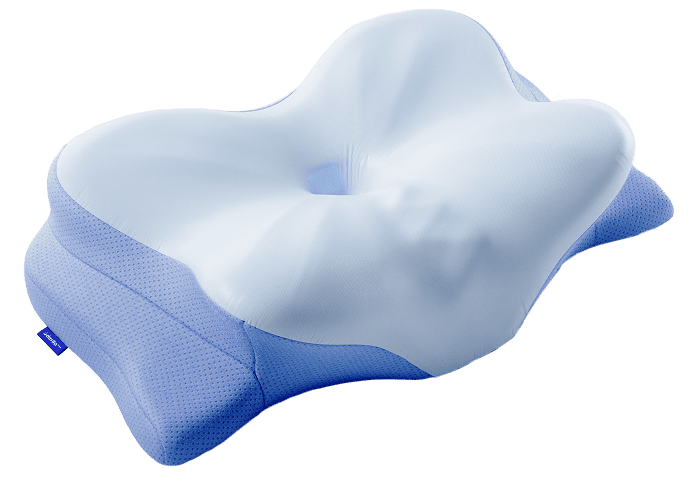
Derila Ergo contoured pillow
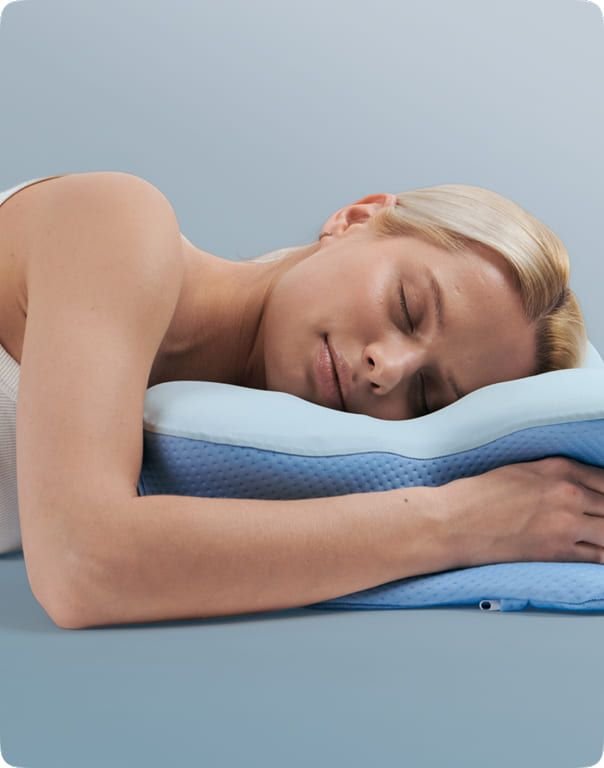
The shape does what a side sleeper needs: raised outer wings for height when you are on your side, a dipped center for when you roll onto your back, and a lower shoulder cut-out so your shoulder is not fighting the pillow. Ventilated memory foam with a washable OEKO-TEX certified cover.
- 60-night money-back guarantee
- Up to 70% off currently
- 3 free bonuses included
- Washable cover
Good fit if you
- Sleep mainly on your side and wake with a stiff neck
- Switch between your side and your back during the night
- Currently double your pillow over for more height
- Sleep hot and keep flipping to the cool side
- Want a long return window rather than a gamble
Look elsewhere if you
- Want a soft, sink-in feel — contoured foam is firm on purpose
- Sleep on your stomach exclusively
- Have very broad shoulders and already use a very tall pillow
- Need it to arrive this week
- Have neck pain with numbness or tingling in an arm — see a doctor first
Who should not buy a new pillow
We would rather you kept your money than bought the wrong tool. A new pillow is unlikely to be the answer if:
- Your neck pain is worst in the evening. Pain that builds through the day belongs to your desk and your posture, not your bed.
- You have numbness, tingling or weakness in an arm or hand. That is a nerve sign. See someone before you spend anything.
- You already measured and your current pillow is within a centimetre or two. Height is the lever. If you are already at the right height, a different brand at the same height is a lateral move.
- Your mattress sags in the middle. Fix the surface your shoulder is sinking into first, or the new pillow will be the wrong height on arrival.
- You sleep on your stomach and plan to keep doing so. The head rotation is the problem, and no pillow shape undoes rotation.
- You want something soft. Side sleeping needs the least give of any position. A pillow you can squash flat with one hand will be squashed flat by your head.
And one thing that outranks all of it
If you snore loudly every night, wake gasping, or someone has told you that you stop breathing, deal with that before you deal with your pillow. A 2025 analysis in Respiratory Medicine put obstructive sleep apnea at 83.7 million US adults — 32.4% of the adult population — and largely undiagnosed (Respiratory Medicine, 2025). The Wisconsin Sleep Cohort estimated that 93% of women and 82% of men with moderate to severe apnea had never been clinically diagnosed (Young et al., Sleep, 1997). Morning headaches and neck tension often travel with it. That is a doctor's appointment, not a bedding purchase.
The cheap extra that helps below the waist
A pillow between your knees. Side sleeping lets your top hip roll forward and twists your lower spine and pelvis. A pillow between the knees stops that rotation, and it costs almost nothing. Together with the pillow you hug in front of your chest — the fix for the top arm, covered in the shoulder section above — it keeps you square from shoulders to hips without changing anything you sleep on.
Before you buy anything
If your neck pain comes with numbness, tingling or weakness in an arm or hand, followed a fall or a crash, or has not improved at all over several weeks, see a healthcare professional. A pillow is not the right tool for those. Better Nights is an editorial site and does not give medical advice.
Frequently asked questions
How high should a pillow be for a side sleeper?
Roughly 4 to 6 inches (10–15 cm) of height that holds up under your head. The check that matters: lying on your side, your nose should point straight ahead and level with the middle of your chest, with your spine in one line. Broader shoulders need the higher end of the range.
Should side sleepers use a firm or soft pillow?
Firm, or medium-firm. Of all sleeping positions, side sleeping needs the least give, because the pillow has to bridge the widest gap. A soft pillow may feel better for the first minute and then collapse to nothing under the weight of your head.
Is memory foam good for side sleepers with neck pain?
Yes, particularly contoured memory foam, because the molded shape holds its height instead of flattening. The main trade-off is heat: choose ventilated or perforated foam with a breathable cover rather than a solid block.
How do I measure the pillow height I need?
Lie on your side with no pillow, on the mattress you actually sleep on, and have someone measure straight up from the mattress surface to the side of your neck just below your ear. That vertical gap is what a pillow has to fill. Most adults measure between 10 and 14 cm. Research from 2024 deriving optimal height from shoulder width found 9.7–11.8 cm gave the best neck alignment and 11.8–13.8 cm scored highest for comfort.
Does a firm mattress change the pillow height I need?
Yes, and more than most people expect. On a firm mattress your shoulder barely sinks in, so the gap between your head and the bed stays wide and you need a taller pillow. On a soft mattress your shoulder drops into the surface and you need less height. Always measure while lying on the bed you sleep in, which accounts for it automatically.
Why does my shoulder or arm go numb when I sleep on my side?
Lying on your side puts body weight through the shoulder joint and raises pressure in the subacromial space where the rotator cuff tendons run. In a 2024 case series of 58 patients with non-traumatic rotator cuff tears, 52 — just under 90% — were side sleepers, though that is an observational finding and not proof that side sleeping causes tears. Getting your head height right helps, and so does hugging a pillow in front of your chest so the top arm has somewhere to rest instead of dragging that shoulder forward. Numbness in specific fingers, or weakness, needs a professional rather than a pillow.
Can two pillows work instead of one tall pillow?
It can get you the height, but stacked pillows slide apart during the night and the support becomes unpredictable. It is a useful way to test how much height you need before buying — not a good long-term arrangement.
How long until a new pillow stops feeling weird?
About two weeks. A different height puts your neck at an angle it has not held in a long time, so unfamiliar is not the same as wrong. If it is still uncomfortable after 14 nights, the height is probably off for you.
Does a pillow between the knees really help?
For side sleepers, often yes. It stops the top hip rolling forward, which reduces the twist through the lower back and pelvis. It is cheap enough that there is no reason not to try it alongside a pillow change.
How we researched this article
A review of the published literature plus a practical measurement guide, alongside manufacturer specifications and publicly available customer feedback. Not laboratory testing, and not medical advice. Return and refund terms come from the manufacturer's own support pages, checked in August 2026.
Sources cited in the text:
- Optimal pillow height derived from shoulder width, 2024 — PubMed
- Sleep position and pain in US adults, March 2025 — National Council on Aging / Pollfish
- Individually adjusted pillow height and chronic neck pain — Journal of Physical Therapy Science, 2023
- Sleep position in patients with rotator cuff tears — Richards DP et al., Arthroscopy, Sports Medicine, and Rehabilitation, 2024
- Obstructive sleep apnea prevalence in US adults, 2024 — Sönmez I et al., Respiratory Medicine, 2025
- Undiagnosed proportion in men and women — Young T et al., Sleep, 1997 (Wisconsin Sleep Cohort)
- Overall strength of evidence for pillows and neck pain — systematic review, NCBI Bookshelf